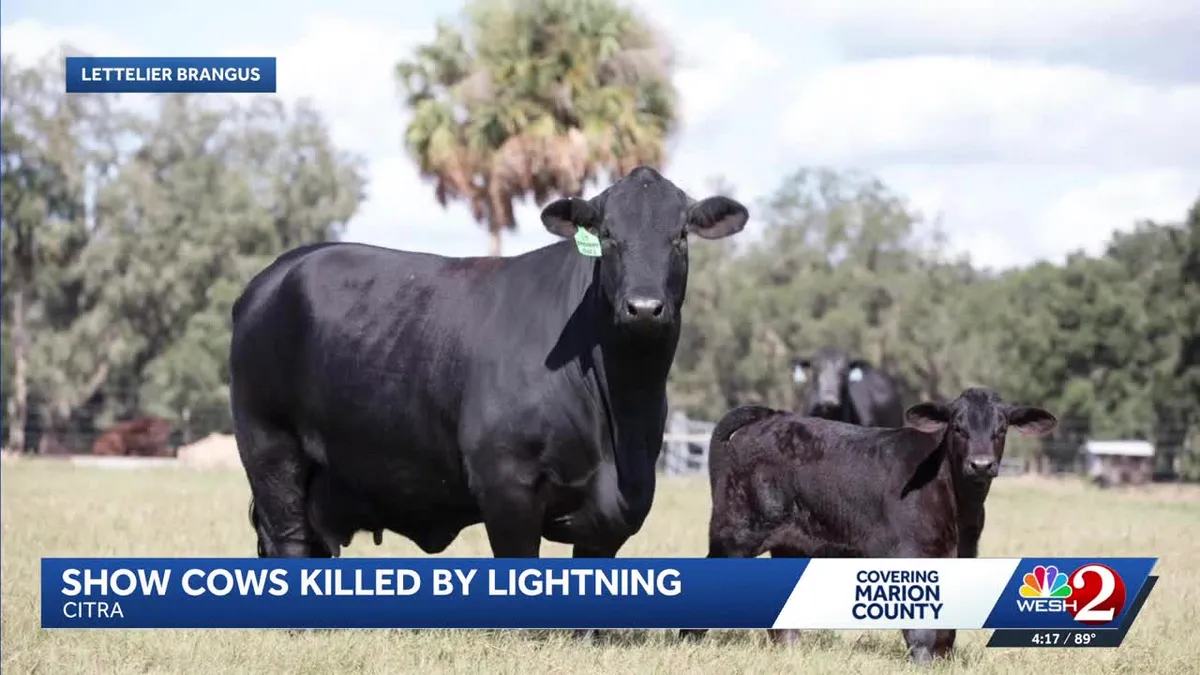
A devastating lightning strike during a severe thunderstorm has resulted in the tragic deaths of an entire herd of show cattle in Marion County. The incident occurred amid intense weather conditions that swept through the region, highlighting the unpredictable and destructive power of nature.
The cattle, which were reportedly being prepared for upcoming shows, were found deceased following the storm. Details surrounding the exact moment of the strike are still emerging, but the event has sent shockwaves through the local agricultural and livestock community. The loss represents not only a significant economic blow to the farm owners but also an emotional toll, given the care and dedication involved in raising show animals.
Tragic Livestock Loss in Marion County
The incident underscores the risks faced by livestock during severe weather events. Lightning strikes, while relatively infrequent in their impact on entire herds, can be catastrophic when they do occur. Show cattle are often highly valued for their genetics, conformation, and potential in competition, making their loss particularly impactful for breeders and owners.
Authorities and agricultural experts are assessing the scene and providing support to the affected farm. Investigations into the precise circumstances of the lightning strike are underway, though the primary cause is attributed to the severe storm. This event serves as a stark reminder of the vulnerability of livestock to natural phenomena and the importance of preparedness in agricultural settings.
The Impact of Severe Weather on Livestock
Severe thunderstorms, characterized by heavy rain, high winds, and electrical activity, pose significant threats to farm animals. Lightning, in particular, can strike the ground and travel through the soil, affecting animals in close proximity. Even a near miss can cause injuries or distress that impact an animal's health and well-being.
The specific breed and composition of the herd (e.g., age, value, purpose) can influence the overall impact of such a tragedy. Show cattle often represent years of selective breeding and investment, making their loss more than just the death of an animal; it can be the loss of a breeding program's future or a competitive season's prospects. The location of the animals during the storm—whether in an open field, under a tree, or in a barn—can also influence their exposure to risk.
Community Response and Support
News of the incident has prompted an outpouring of sympathy and support from the wider agricultural community and local residents. Farm organizations and veterinary services are reportedly offering assistance to the affected farm, ranging from practical help with the aftermath to emotional support for the owners and their families.
Events like this highlight the interconnectedness of the agricultural community, where tragedies affecting one farm can resonate deeply with others who understand the dedication and challenges involved in raising livestock. The focus now shifts to managing the immediate aftermath and supporting the farm in its recovery process.