Scientists are engaged in a critical, high-stakes operation to salvage one of the planet's most endangered tree species, with the sole surviving wild specimen precariously rooted to a cliff face on Robinson Crusoe Island. This remote outpost in Chile's Juan Fernández archipelago has become the focal point of an urgent conservation mission to collect seeds before the unique plant is lost forever.
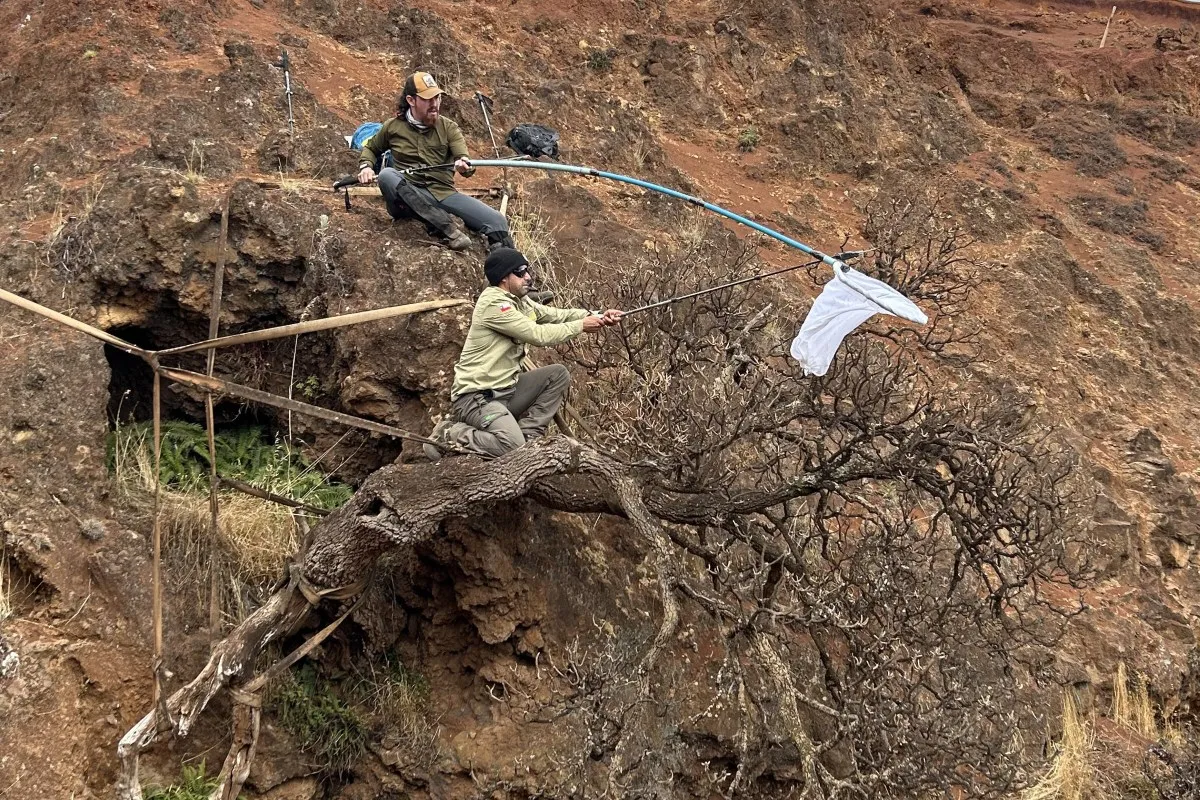
The perilous undertaking, documented by the Royal Botanic Gardens in the UK, involved conservationists deploying a large net to access the seeds of the Dendroseris neriifolia tree. This remarkable effort underscores the escalating threat to plant biodiversity, a crisis often overshadowed by concerns for fauna, yet alarmingly severe. Research indicates that in the past 250 years, plant extinctions have occurred at twice the rate of all bird, mammal, and amphibian extinctions combined, highlighting the profound and often unacknowledged loss of botanical diversity globally.
Conservation Under Extreme Duress
The Dendroseris neriifolia species has faced an onslaught of challenges, including significant habitat destruction, the pervasive encroachment of invasive flora, and previous unsuccessful conservation initiatives. The Royal Botanic Gardens in Kew, near London, has detailed the species' dire situation. The recent seed collection mission aimed to mitigate these threats, gathering genetic material from the last known wild individual of this distinct lineage.
The operation yielded twenty-nine seeds, with subsequent X-ray analysis at the Botanic Gardens indicating that twenty-five of these were potentially viable. Encouragingly, seven seedlings have already begun to establish, offering a glimmer of hope that this last-ditch effort might succeed in preventing the species' extinction.
A History of Near Extinction
This is not the first time that dedicated efforts have been made to secure the future of the Dendroseris neriifolia tree. By 1980, the wild population had dwindled to just seven specimens. Park rangers initiated recovery attempts in the 1990s, followed by reintroduction programs in the early 2000s, but these measures ultimately failed to secure the species' long-term survival in its natural habitat.
The current situation allows for minimal margin for error. The very existence of the tree is threatened not only by natural events, such as its precarious cliffside position, but also by the limited scope of ex-situ conservation. Currently, only a single specimen is being cultivated at the VerdeNativo botanic gardens in Chile, making the success of the recent seed collection paramount.
A Race Against Time
Scientists acknowledge the extreme urgency of the situation. Diego Penneckamp, a scientist at the VerdeNativo botanic gardens, emphasized the critical nature of the endeavor. "It is a race against time," he stated. "This international collaboration to support the last remaining individual could prevent the extinction of a species that represents a unique lineage with its own natural history."
The successful propagation of these collected seeds is vital for preserving the unique genetic heritage of Dendroseris neriifolia. This effort represents a critical intervention against an irreversible loss of biodiversity, underscoring the importance of dedicated botanical research and conservation in the face of global environmental pressures.