
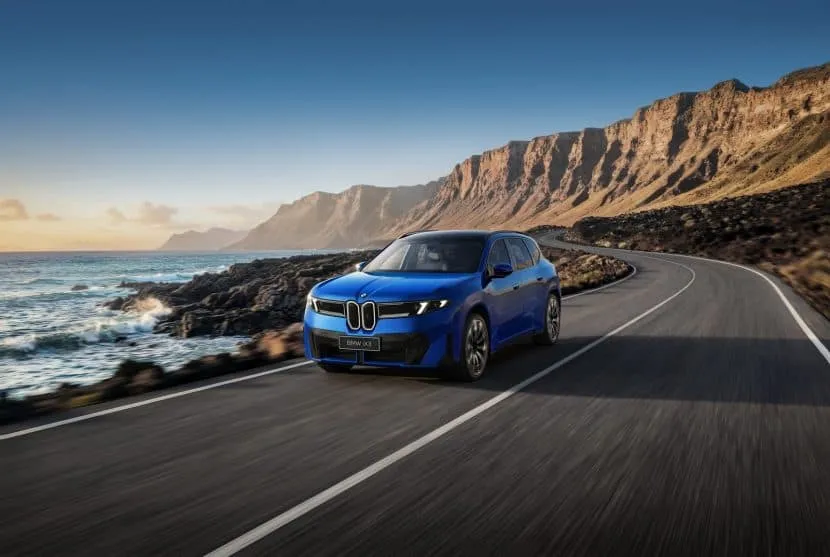
In a significant move that blurs the lines between automotive marketing and artificial intelligence, BMW has revealed its latest advertising campaign for the iX3 electric vehicle, a project entirely conceived and executed by generative AI. This groundbreaking initiative, which omitted traditional production elements such as cameras, sets, and human film crews, represents a bold exploration into the capabilities and limitations of AI in product storytelling. Bernd Koerber, BMW's Senior Vice President for Brand and Product Management, highlighted the experimental nature of the campaign, emphasizing that the focus was as much on the process as on the final output.
The 30-second advertisement showcases the BMW iX3's impressive WLTP range of 805 kilometers by ingeniously depicting the passage of time. The narrative follows a driver who enters the vehicle and embarks on a journey, during which his beard grows substantially, implying an extended period of travel before a recharge would be necessary. This clever, wordless communication of the car's endurance underscores BMW's innovative approach to conveying key product benefits through novel technological means. The campaign serves not only as a demonstration of AI's creative potential but also as a case study for its strategic application in marketing.
The AI-Driven Creative Process
BMW's foray into an AI-generated campaign is rooted in a desire to understand the evolving landscape of generative AI and its practical applications within the creative sphere. Koerber articulated that the experiment was designed to probe the effectiveness of AI in product storytelling, identifying both its strengths and weaknesses. The underlying objective was to assess where AI can enhance the creative process, potentially enabling faster prototyping, the exploration of visually complex or cost-prohibitive scenarios, and a fundamental rethinking of traditional advertising workflows.
However, the initiative also served to illuminate current challenges. Koerber pointed out that maintaining visual continuity across different shots remains a notable hurdle for AI generation. Furthermore, achieving precise and accurate visual representations of the product itself—a critical factor in automotive advertising—continues to be a difficult aspect for the technology. These acknowledgements highlight that while AI offers powerful new tools, human oversight and intervention are still essential for ensuring brand integrity and product fidelity in marketing communications.
Assessing AI's Creative and Commercial Viability
A key takeaway from BMW's experiment is that the decision to employ AI was not driven by cost reduction but by a strategic evaluation of creative merit. Koerber emphasized that the suitability of generative AI hinges on the specific message and target audience, rather than solely on budgetary considerations. For a campaign aiming to evoke a sense of time passing and subjective experience, as with the iX3's range narrative, AI proved to be an effective medium. Conversely, for advertising that demands meticulous detail and precision, such as product reveals or close-up interior shots, the calculus for using AI would likely differ significantly.
This nuanced perspective acknowledges the evolving role of AI as a tool that complements, rather than replaces, human creativity. While BMW has a long history of integrating AI into design, engineering, and manufacturing processes, its application in public-facing creative content marks a new frontier. The willingness to transparently document this process, including its limitations, offers valuable insights for the broader industry.
The Human Element in AI-Generated Content
Koerber's assertion that "AI is a powerful new tool, but it cannot replace the value of human craft and ideas. The images may be generated, but the idea, the story and the execution still come from people" is particularly significant. This statement serves a dual purpose: it offers reassurance to creative professionals and agencies concerned about job displacement, while also reflecting the authentic collaborative process behind the iX3 campaign. The core concept of the 'beard gag,' the emotional resonance of illustrating time's passage, and the strategic decision to convey range visually rather than quantitatively, are all products of human ingenuity.
The AI's role, in this context, was to render these human-conceived ideas into visual form. It acted as an advanced execution tool, translating a human-driven narrative into the final advertisement. The efficacy of this approach underscores the current paradigm where AI amplifies human creativity. The long-term question of how this dynamic will evolve as AI capabilities advance remains a subject of ongoing discussion, but for now, BMW has successfully generated buzz, not just for the iX3's range, but for its pioneering use of artificial intelligence in advertising.
Impact Analysis
The Future of AI in Automotive Marketing
BMW's experimental AI-generated campaign for the iX3 signifies a pivotal moment in automotive advertising. It demonstrates a pragmatic approach to integrating cutting-edge technology, not just for novelty, but to test its efficacy in conveying complex brand messages. The acknowledgement of AI's limitations, particularly in continuity and product accuracy, provides a realistic outlook for other brands considering similar ventures. This transparency is crucial for setting industry standards and managing expectations.
The campaign's success in generating discussion highlights the power of innovative storytelling, irrespective of the tools used. It suggests a future where AI can be leveraged for rapid ideation and visualization, allowing marketers to explore a wider range of creative concepts. However, the continued emphasis on human ideas and execution suggests a hybrid model, where AI serves as a powerful assistant to human creatives. This approach not only mitigates concerns about job displacement but also ensures that campaigns remain authentic and aligned with brand values, potentially leading to more engaging and effective marketing communications across the automotive sector.