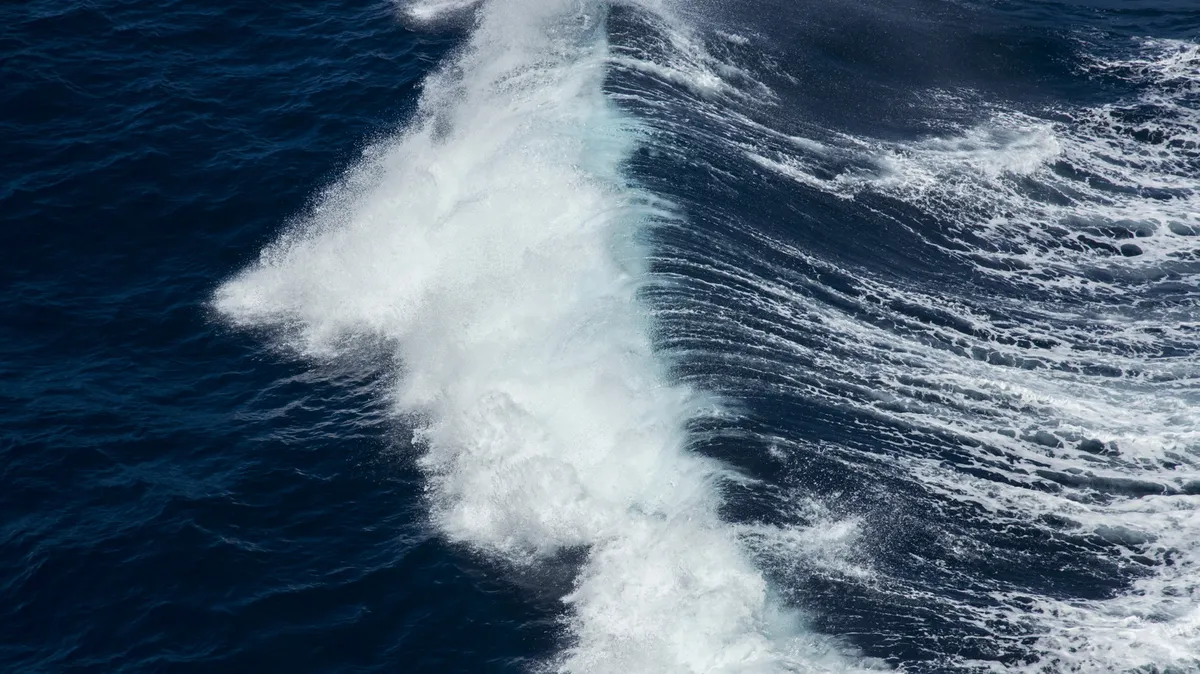
For centuries, tales of monstrous waves that appeared with no discernible cause were a staple of maritime folklore. These colossal, seemingly inexplicable walls of water, often referred to as rogue waves, were frequently dismissed by many as exaggerated sailor's yarns or outright myths. However, modern scientific observation, particularly advancements in satellite technology, has not only corroborated these accounts but has provided concrete evidence and a clearer understanding of these oceanic phenomena. The transition from maritime legend to scientifically validated event marks a significant shift in our comprehension of ocean dynamics.
The scientific community's skepticism began to erode with the first instrumental measurement of a rogue wave in 1995. An 80-foot wave struck the Draupner oil platform in the North Sea, a well-documented event that provided the first empirical data on these extreme waves. This incident, while dramatic, was pivotal, transforming the concept of rogue waves from anecdotal accounts into a tangible subject for scientific study. Since then, subsequent research, heavily reliant on satellite surveillance, has continued to expand our knowledge, revealing that these waves are not only real but can manifest far from the powerful storms typically associated with large ocean swells.
Understanding Rogue Waves Through Advanced Observation
The pivotal role of satellite technology in validating the existence of rogue waves cannot be overstated. Initial satellite investigations commenced in 2001 with the European Space Agency's ERS-2 satellite. This marked a critical step in systematically observing ocean surface conditions from space. More recently, the Surface Water and Ocean Topography (SWOT) satellite, launched in late 2024, has provided unprecedented data, capturing waves ranging from 65 to an astonishing 115 feet in height. These observations have been instrumental in demonstrating that rogue waves can occur in vast oceanic expanses, often hundreds or even thousands of miles away from major storm systems, challenging previous assumptions about their formation and location.
Beyond merely confirming their existence, extensive research has begun to illuminate the mechanisms behind rogue wave formation. Following the Draupner incident, an international team led by Francesco Fedele, an associate professor at Georgia Tech's School of Civil and Environmental Engineering, embarked on an 18-year study. This comprehensive analysis involved sifting through 27,500 wave records from the North Sea, each containing detailed information on wave height, frequency, and direction. The findings from this extensive dataset suggest that rogue waves typically arise from two primary constructive wave interference processes.
Mechanisms of Rogue Wave Formation
The first identified mechanism is known as linear focusing. This occurs when wave trains traveling at different speeds and along varying directions converge and align, their energy constructively combining to create a single, exceptionally tall wave. This synchronized interaction amplifies the wave's height significantly beyond that of the individual contributing waves. The organized convergence of multiple wave systems is crucial for this phenomenon to develop into a rogue wave.
The second significant process involves a natural, nonlinear evolution of wave patterns. In this scenario, the wave shape becomes steeper and taller as its trough (the lowest point) flattens. This alteration effectively increases the wave's height by up to 20% without the need for external wave trains to combine. This intrinsic characteristic of wave dynamics allows for the formation of towering waves even in conditions that might not immediately suggest the potential for such extreme events. Fedele's ongoing research aims to leverage these insights to improve the predictability of rogue wave occurrences.
The Reality and Risk of Rogue Waves
While the scientific validation of rogue waves might evoke images from disaster films, the practical implications for modern maritime travel are nuanced. Although these extreme waves are far more common than previously believed, the likelihood of a cruise ship encountering one remains statistically low. Navigational protocols and advanced weather forecasting allow ships to avoid areas with high wave activity. Historical incidents, such as the Queen Elizabeth 2's encounter with a 92-foot wave in 1995, where the ship successfully navigated the event without injury, highlight the resilience of modern vessels and the experience of their crews in managing such encounters. Despite their rarity on a per-voyage basis, the National Oceanic and Atmospheric Administration still classifies them as uncommon, underscoring the respect these powerful natural events command.