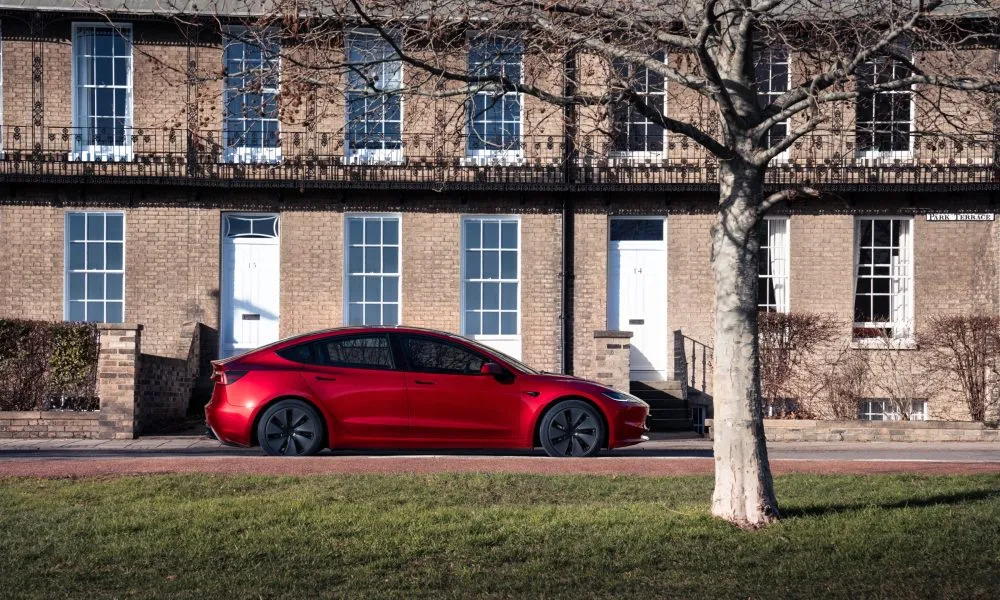
Tesla's pursuit of ultimate performance continues to be a driving force behind its product development, with internal discussions now surfacing about potentially equipping the Model 3 with a Plaid powertrain. This high-performance variant, known for its extreme acceleration and speed, has previously been exclusive to the flagship Model S and Model X. However, recent insights suggest that the engineering team is actively contemplating its integration into the more mainstream Model 3.
Lars Moravy, Tesla's Vice President of Vehicle Engineering, openly discussed this possibility on the 'Ride the Lightning' podcast. He admitted to frequently considering a Plaid-tuned Model 3, highlighting its potential appeal within the company's future vehicle strategy. This contemplation gains significance given the recent discontinuation of the Model S and Model X Plaid variants, potentially creating an opening for the performance-oriented powertrain to be repurposed in other models.
Considering the Plaid Model 3
The prospect of a Plaid Model 3 raises exciting questions about how Tesla would adapt its cutting-edge powertrain technology for a vehicle with a different chassis and engineering constraints. Moravy indicated that the Model 3 Plaid would likely utilize the same advanced carbon-sleeved motors found in the previous Model S Plaid. These motors are renowned for their exceptional power output and efficiency, contributing to the Plaid models' blistering performance figures.
However, the integration of such a potent powertrain into the Model 3 presents considerable engineering hurdles. Moravy specifically cited 'packaging' as a major challenge, describing the available space within the Model 3's architecture as a "tight engineering squeeze." This suggests that significant design modifications would be necessary to accommodate the motors, battery components, and associated thermal management systems required for a Plaid-level performance output without compromising other critical vehicle functions or aesthetics.
Performance Benchmarks and Market Positioning
While there are no concrete production plans announced for a Model 3 Plaid, its potential inclusion in the lineup warrants a look at its performance implications. The current Model 3 Performance already delivers impressive acceleration, achieving 0-60 mph in a mere 2.9 seconds and reaching a top speed of 163 mph. A Plaid version, leveraging the advanced motors, could theoretically push these figures even further, potentially offering a significant leap in straight-line speed and track capability.
The introduction of a Plaid Model 3 would also need to be carefully positioned within Tesla's broader product portfolio. With the Roadster anticipated to offer hypercar-level performance, a Plaid Model 3 would likely aim to fill a performance niche that sits between the top-tier performance variants and the standard models. Enhancements to aerodynamics, suspension, and handling would be crucial to complement the powertrain's power, ensuring a balanced and exhilarating driving experience that justifies its premium positioning.
Engineering and Aerodynamic Considerations
Beyond the powertrain itself, the successful implementation of a Plaid Model 3 would demand substantial engineering effort focused on the vehicle's dynamics and overall structure. The 'tight engineering squeeze' mentioned by Moravy underscores the complex task of integrating these high-performance components while maintaining safety standards and vehicle integrity. This could involve redesigning subframes, optimizing battery pack placement, and developing bespoke cooling solutions.
Furthermore, the gains in power would necessitate corresponding improvements in aerodynamics and chassis tuning. A more powerful vehicle generates greater forces, requiring enhanced downforce for stability at high speeds and robust suspension systems to manage the increased power delivery effectively. Tesla's expertise in vehicle dynamics and aerodynamic design would be put to the test to ensure the Plaid Model 3 not only performs exceptionally but also remains a refined and composed machine under all driving conditions.
Impact Analysis
The potential introduction of a Plaid powertrain into the Model 3 could signify a strategic shift for Tesla, aiming to extend its high-performance identity across a wider range of its electric vehicle offerings. If successful, it would offer consumers a more accessible entry point into Tesla's most potent performance technology. This move could also serve to invigorate competition within the electric performance sedan market, pushing other manufacturers to innovate and enhance their own high-performance offerings. The success of such an endeavor would hinge on Tesla's ability to overcome the significant packaging and engineering challenges, balancing extreme performance with the practical considerations of mass production and consumer demand.