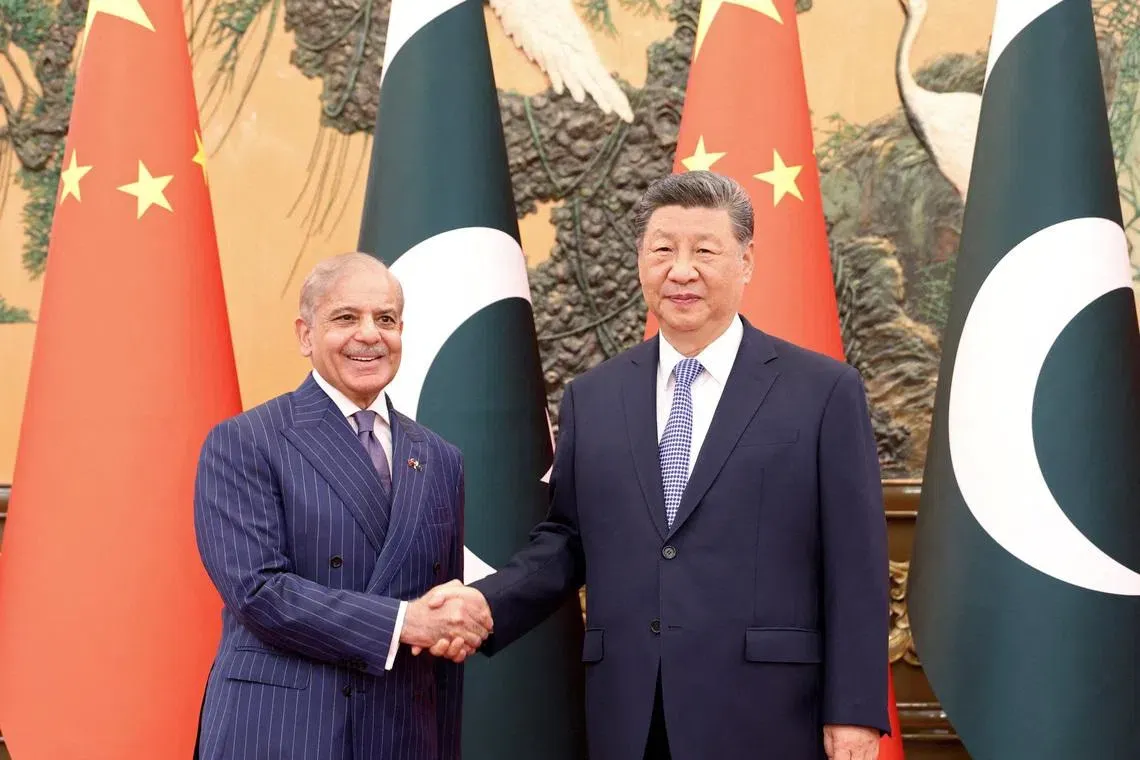
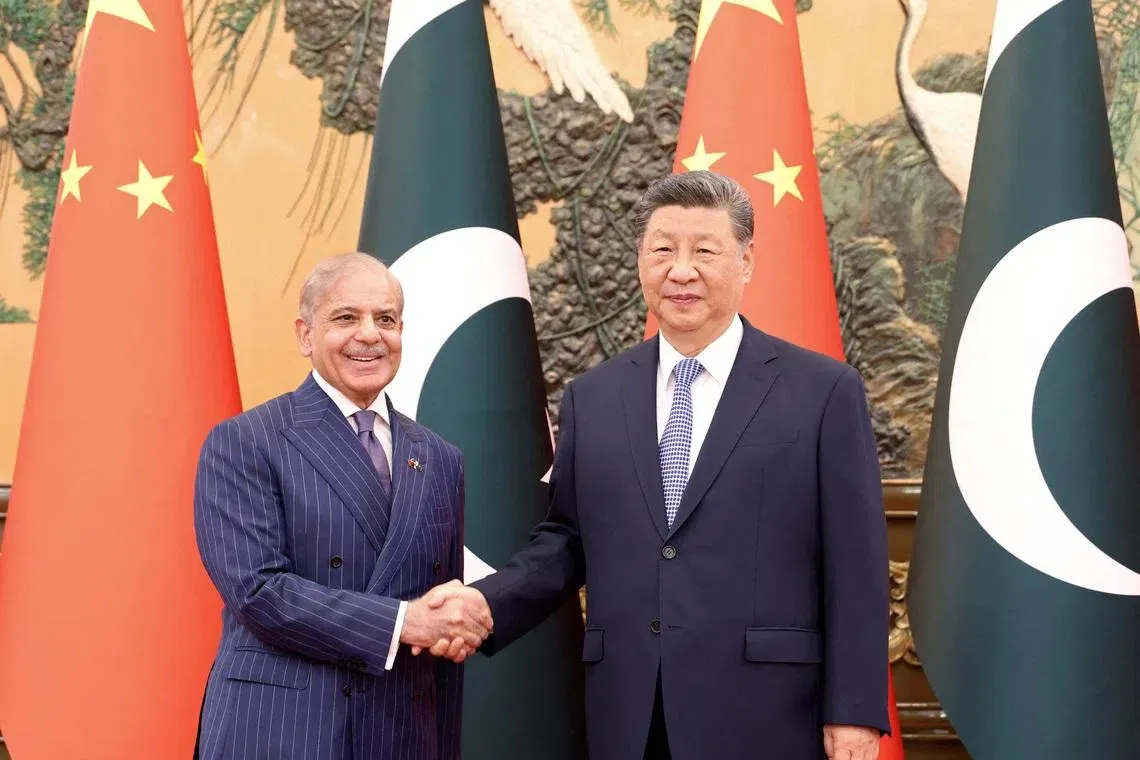
KARACHI – China and Pakistan have signaled a significant deepening of their strategic partnership, agreeing to a "new broad consensus" aimed at enhancing the development of the China-Pakistan Economic Corridor (CPEC) and positioning the Gwadar port as a pivotal regional connectivity hub. This renewed commitment emerged from a joint statement following Pakistani Prime Minister Shehbaz Sharif's recent visit to Beijing, a mission undertaken as Pakistan seeks crucial foreign investment while navigating complex regional dynamics, including ongoing tensions with Afghanistan and its role in mediating the Iran conflict.
The joint statement underscored a collaborative approach to CPEC's future, welcoming third-party participation under an agreed framework. This consensus was formalized after high-level meetings between Prime Minister Sharif, Chinese President Xi Jinping, and Premier Li Qiang. Both nations emphasized their commitment to the "high-quality" development of CPEC, a cornerstone of China's ambitious Belt and Road Initiative. Key priorities include the robust development of Pakistan's Gwadar port and the strengthening of vital road and port infrastructure, which includes plans for the Khunjerab Pass and upgrades to the Karakoram Highway, the primary overland route connecting the two nations.
Strategic Infrastructure and Security Commitments
The renewed focus on CPEC involves substantial upgrades to existing infrastructure and the development of new logistical pathways. Specifically, the plans encompass the strategic Khunjerab Pass and a significant upgrade of the Karakoram Highway. This highway is not only the main overland link between China and Pakistan but also a critical component for regional trade and transit. The ambition extends to transforming the Gwadar port into a more effective regional hub, leveraging its strategic coastal location to facilitate trade and connectivity across Central and South Asia. This vision aims to unlock greater economic potential for both nations and the wider region.
Furthermore, a critical aspect of this enhanced cooperation involves Pakistan's commitment to bolstering security measures. In response to ongoing concerns from Beijing regarding the safety of Chinese nationals and investments within Pakistan, Islamabad has pledged targeted steps to improve security and foster greater cooperation. This proactive stance is crucial, given the history of militant attacks targeting Chinese interests in Pakistan, and aims to provide a more stable environment for continued Chinese investment and project execution.
Regional Diplomacy and Security Cooperation
Beyond economic and infrastructure ties, the discussions also touched upon significant regional diplomatic initiatives. China acknowledged and appreciated Pakistan's diplomatic efforts in facilitating a temporary ceasefire between the United States and Iran and in hosting peace talks. Both nations reiterated their support for a five-point initiative aimed at restoring peace in the Middle East, with both offering to contribute positively towards its implementation. This collaborative stance highlights a shared interest in regional stability and de-escalation.
Pakistan used the occasion to reaffirm its steadfast commitment to the one-China principle. The nation recognized Taiwan, a self-governing democracy claimed by Beijing, as an "inalienable" part of China and explicitly stated its opposition to any form of Taiwan independence. This position aligns with China's long-standing foreign policy stance. In parallel, both countries expressed shared concerns regarding regional security, particularly concerning the use of territory by groups such as the Tehrik-i-Taliban Pakistan (TTP) and the Eastern Turkistan Islamic Movement (ETIM) to undermine regional security or conduct attacks. Both nations are committed to opposing such activities and ensuring border security.
Additionally, Pakistan welcomed China's engagement in promoting dialogue with Afghanistan. This includes a mutual opposition to any group utilizing regional territories to threaten security or launch attacks, a move aimed at enhancing stability and counter-terrorism efforts in the broader South Asian context. The ongoing mediation efforts and reinforced security cooperation underscore a strategic alignment between China and Pakistan on key geopolitical issues.
Impact Analysis
The revamped economic corridor and enhanced focus on the Gwadar port signal a strategic recalibration by both China and Pakistan. For Pakistan, this represents a critical opportunity to attract much-needed foreign investment and stimulate economic growth, particularly through infrastructure development and enhanced trade facilitation. The renewed security guarantees for Chinese workers and assets aim to foster greater investor confidence, a crucial factor given Pakistan's current economic climate. For China, the strengthened CPEC aligns with its broader Belt and Road Initiative objectives, reinforcing its strategic presence and economic influence in the region. The Gwadar port's development as a regional hub could significantly alter regional trade routes and China's access to the Arabian Sea. Furthermore, the coordinated diplomatic stances on regional issues, including the Middle East and Afghanistan, underscore a growing strategic alignment, positioning both nations as key players in regional stability dialogues, although potential implications for relationships with other global powers and regional actors warrant ongoing observation.