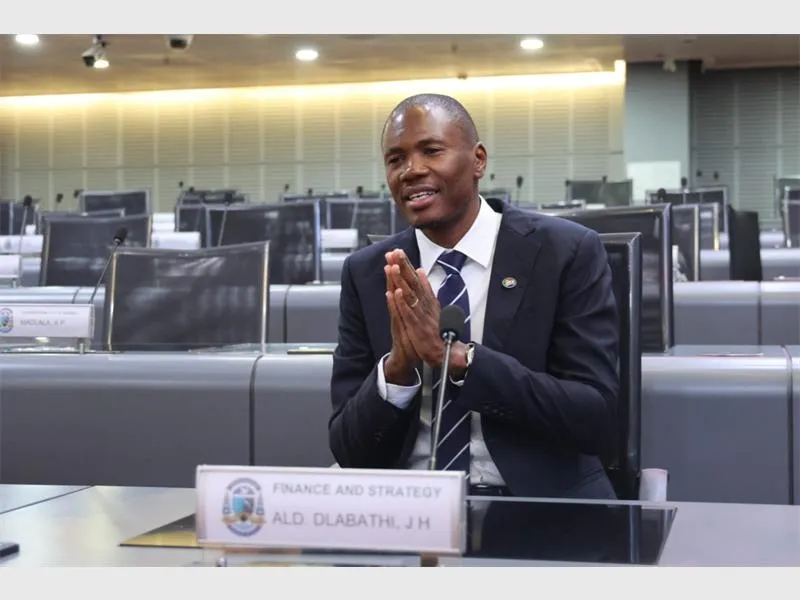
The City of Ekurhuleni has formally presented its budget for the 2026/27 financial year, setting an ambitious R71 billion financial plan. The core objectives of this budget are to fundamentally restore service delivery, systematically rebuild critical infrastructure, enhance financial stability, and actively stimulate economic growth across the metropolitan area. Presenting the budget speech, MMC for Finance, Strategy and Corporate Planning and ICT, Jongizizwe Dlabathi, emphasized the administration's commitment to re-establishing public trust through tangible improvements in service provision and accelerating the pace of visible service delivery initiatives. This comprehensive financial framework aims to address long-standing challenges and set a new trajectory for the city's development.
A significant revelation from the budget presentation involved the identification of over R2.5 billion in electricity revenue losses during the first quarter of the 2024/25 financial year. Dlabathi attributed these substantial losses to sophisticated issues including account manipulation, data deletions, and inefficiencies within the billing systems, particularly impacting large power users. The city has already initiated corrective actions, successfully billing R2 billion and recovering R819 million through back-billing processes. Furthermore, investigations are underway to ascertain any potential criminal conduct or corruption associated with these revenue discrepancies, signaling a firm stance against financial misconduct.
Financial Recovery and Revenue Management
In tandem with addressing revenue losses, Ekurhuleni is implementing robust measures to bolster its financial health. The city reported a marked improvement in its meter reading performance, an essential metric for accurate billing, which has risen from 84% to an impressive 97%. These efforts are part of a broader strategy to strengthen overall revenue collection capabilities and proactively prevent future financial leakages. The recovered funds and improved operational efficiencies are earmarked for reinvestment into service delivery and infrastructure projects, underscoring a commitment to fiscal prudence and accountability in public finance management.
The municipality is also enhancing its internal controls and auditing processes. Investigations into the identified electricity revenue losses are expected to uncover systemic weaknesses and identify individuals responsible for fraudulent activities. The commitment to transparency and accountability in financial matters is a cornerstone of the new budget, aiming to build confidence among residents and stakeholders. By tackling these issues head-on, Ekurhuleni seeks to create a more sustainable financial model that supports long-term service delivery commitments and economic prosperity.
Tariff Adjustments and Service Sustainability
Proposed Tariff Increases for 2026/27
Residents of Ekurhuleni will experience moderate tariff increases starting July 1, 2026, as the city seeks to balance affordability with the imperative of maintaining and enhancing service delivery. The administration has strived to mitigate the impact of these adjustments on consumers, acknowledging the prevailing economic pressures. The proposed increases include a 2% rise in property rates, an 11% increase for water tariffs, and 8.35% for sanitation services. Refuse removal tariffs will see a 3.7% increase, while burial and cemetery tariffs will remain unchanged for Ekurhuleni residents. Electricity tariff adjustments will be aligned with the approved national guidelines, ensuring consistency with broader energy sector policies.
Dlabathi characterized these tariff adjustments as a delicate balance, designed to ensure the financial viability of the city's services without imposing undue hardship. The revenue generated from these tariffs is crucial for funding the extensive repairs, maintenance, and capital investment programs outlined in the budget. The city's commitment to transparent communication regarding tariff structures and their impact on household budgets remains a priority, aiming to foster understanding and cooperation with its residents.
Infrastructure Investment and Maintenance
Elevated Repairs and Maintenance Budget
A cornerstone of the R71 billion budget is the significant uplift in the allocation for repairs and maintenance, which has been increased from R3.8 billion to R4.6 billion. This substantial investment underscores the city's dedication to preserving and upgrading its existing infrastructure. Key areas of focus for this enhanced maintenance budget include R1.4 billion dedicated to electricity infrastructure, R830 million for roads and stormwater systems, and R1.9 billion for water and sanitation maintenance. Additional allocations cover streetlight maintenance (R104.3 million), sinkhole repairs (R54 million), and the upkeep of municipal buildings and facilities (R197.4 million). This proactive approach to maintenance is vital for ensuring the reliability and longevity of essential public services.
The city's commitment to infrastructure renewal extends beyond routine maintenance. A capital budget of R3.3 billion has been allocated for infrastructure development projects. Notable investments include R586 million for energy infrastructure upgrades, R707 million for water and sanitation projects, and a substantial R1.4 billion earmarked for roads and transport infrastructure improvements. Community services and safety initiatives will receive R97.7 million and R88.2 million, respectively. Furthermore, R150 million has been allocated for critical ICT upgrades and cybersecurity enhancements, reflecting the city's acknowledgment of the growing importance of digital infrastructure and security. To expedite repairs, particularly for road infrastructure, the city plans to establish its own asphalt batching plant, aiming to increase efficiency and reduce reliance on external contractors.
Housing Development and Urban Upgrades
Accelerated Housing Delivery Program
The Ekurhuleni budget places a strong emphasis on addressing the housing backlog, with significant investments planned for housing development and informal settlement upgrades. The city aims to deliver a total of 70,000 housing units through the execution of 11 large-scale development projects. Priority projects have been identified in areas such as Vosloorus Ext 9, Thembisa Ext 27, and Clayville Ext 45, targeting communities with critical housing needs. These developments are designed to provide formal housing solutions, improving living conditions and access to basic services for thousands of households.
In addition to new housing units, the budget includes specific allocations for the upgrading of informal settlements. R38.5 million is designated for the reblocking of four informal settlements, a process that aims to create more organized and safer living environments. Furthermore, R6.8 million is allocated for the relocation of approximately 6,000 households from high-risk areas to more suitable locations. Planning projects benefiting nearly 89,000 households have also been funded with R9.8 million, ensuring that future housing and upgrade initiatives are well-conceived and sustainable. These housing initiatives are central to the city's broader strategy of inclusive urban development and improving the quality of life for all residents.
Economic Stimulation and Employment Creation
Establishing the Ekurhuleni Development Agency
To actively foster investment and drive economic growth, Ekurhuleni has allocated R7.5 million towards the establishment of the Ekurhuleni Development Agency (EDA). This agency is intended to serve as a catalyst for economic development, attracting investment, supporting local businesses, and creating employment opportunities within the metropolitan area. The city also reaffirmed its commitment to supporting youth, women, and small and medium-sized enterprises (SMEs) by prioritizing procurement opportunities and systematically reviewing existing barriers that hinder SMEs from accessing municipal tenders. This focus on inclusive economic growth aims to ensure that the benefits of development are broadly shared across the community.
Acknowledging the prevailing national challenge of high unemployment, with the current rate at 32.7%, Dlabathi stressed the critical need for enhanced collaboration between the public and private sectors. The budget's economic development initiatives are designed to stimulate entrepreneurship and create a more conducive environment for business growth. By supporting SMEs and fostering innovation, Ekurhuleni aims to contribute significantly to job creation and economic diversification, thereby improving the livelihoods of its residents and enhancing the region's economic resilience.
Enhancing Public Services and Safety
Recruitment Drive and Law Enforcement Support
The city has confirmed plans to accelerate the recruitment of essential personnel, including 700 permanent cleaners and 290 Economic Management and Assistance Programme (EMAP) officers. While initial timelines were subject to delays, the process is now set to be fast-tracked, with recruitment expected to commence in July 2026. This expansion of the workforce is crucial for improving the cleanliness and operational efficiency of municipal services. The city also plans to enhance its fleet by procuring 12 additional waste compactor trucks and between 20 and 25 new EMAP operational vehicles, ensuring that frontline service delivery is adequately equipped.
The expansion of the EMAP, a dedicated municipal law enforcement unit, signifies a commitment to improving public safety and order. These officers play a vital role in enforcing municipal by-laws, managing traffic, and responding to public disturbances. The increased operational capacity, supported by new vehicles, will enable the EMAP to serve the community more effectively. Furthermore, the recruitment of additional cleaners is directly linked to the goal of improving the aesthetic appeal and hygiene of public spaces across Ekurhuleni, contributing to a better living environment for all residents.
Debt Relief and Anti-Corruption Measures
Expanded Debt Relief Scheme
In a significant move to support residents facing financial difficulties, Ekurhuleni has expanded its Debt Rehabilitation and Incentive Scheme. Under the revised scheme, eligible residents may now qualify for a 100% write-off of outstanding debt that is older than 12 months, an increase from the previous threshold of 75%. This initiative is particularly aimed at assisting indigent households and those who have struggled to meet their financial obligations due to economic hardship. The city reported that R2.8 billion in debt write-offs had already been implemented by the third quarter of the current financial year, providing substantial relief to many families.
The city has also intensified its efforts to combat corruption and illicit financial activities. Dlabathi issued a firm warning to municipal officials and external service providers engaging in corruption and fraudulent billing practices, stating unequivocally that the city would pursue the harshest possible consequences for offenders. A zero-tolerance policy towards corruption, maladministration, and the misuse of public funds will be strictly enforced. This commitment to integrity is fundamental to rebuilding public trust and ensuring that municipal resources are used effectively for the benefit of the community, underpinning the overall objective of restoring confidence in local governance and guaranteeing dependable service delivery.
Impact Analysis
The Ekurhuleni R71 billion budget represents a strategic pivot towards stabilizing municipal finances and revitalizing service delivery, with significant implications for its residents, businesses, and the broader economic landscape of Gauteng. The substantial increase in the repairs and maintenance budget, coupled with significant capital allocations for infrastructure development, signals a commitment to addressing the city's aging infrastructure and improving the reliability of essential services like water, electricity, and transportation. These improvements are crucial for fostering a stable environment conducive to business investment and residential satisfaction. The focus on economic development through the establishment of the EDA and support for SMEs is particularly important in a region grappling with high unemployment; its success could lead to tangible job creation and economic diversification. However, the moderate tariff increases, while necessary for financial sustainability, will place additional pressure on households, necessitating careful monitoring of their impact. The intensified anti-corruption drive and debt relief measures are critical for rebuilding public trust and ensuring equitable service provision. Overall, if effectively implemented, this budget has the potential to significantly enhance the quality of life for Ekurhuleni residents and lay a foundation for sustainable economic growth, though its success will depend on robust oversight and efficient execution.