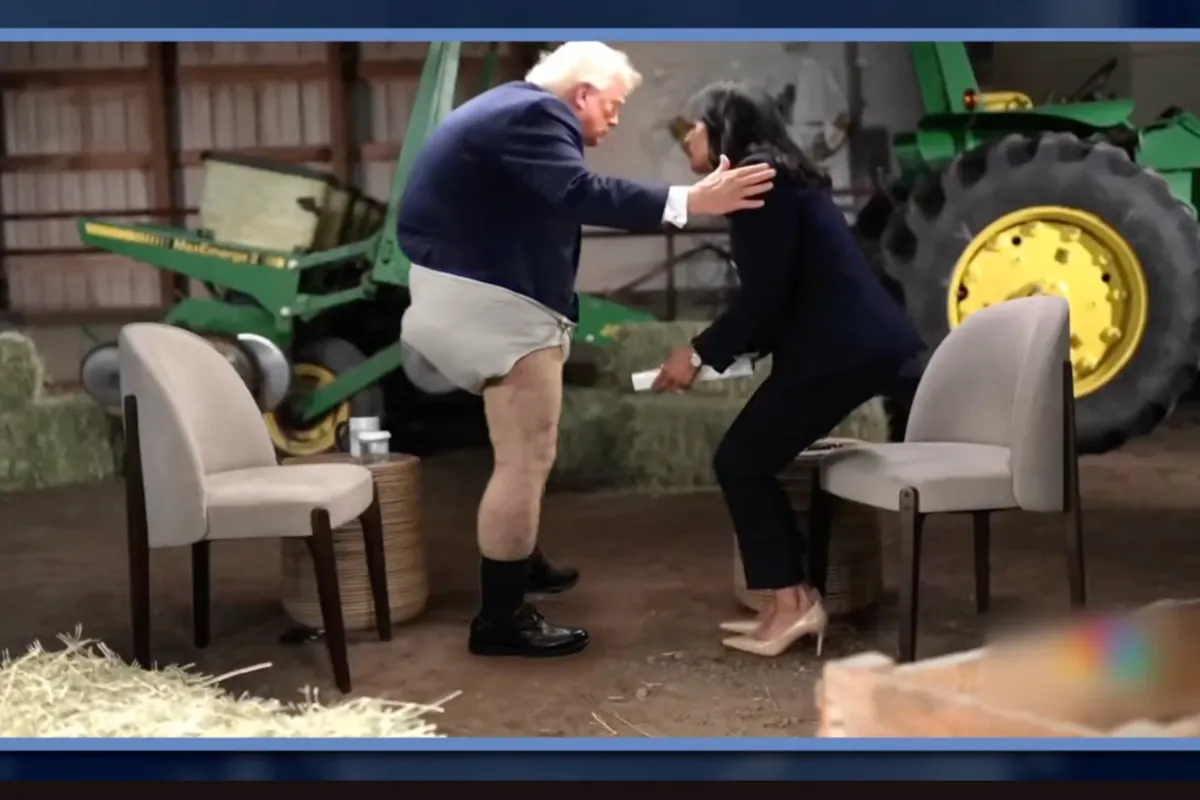
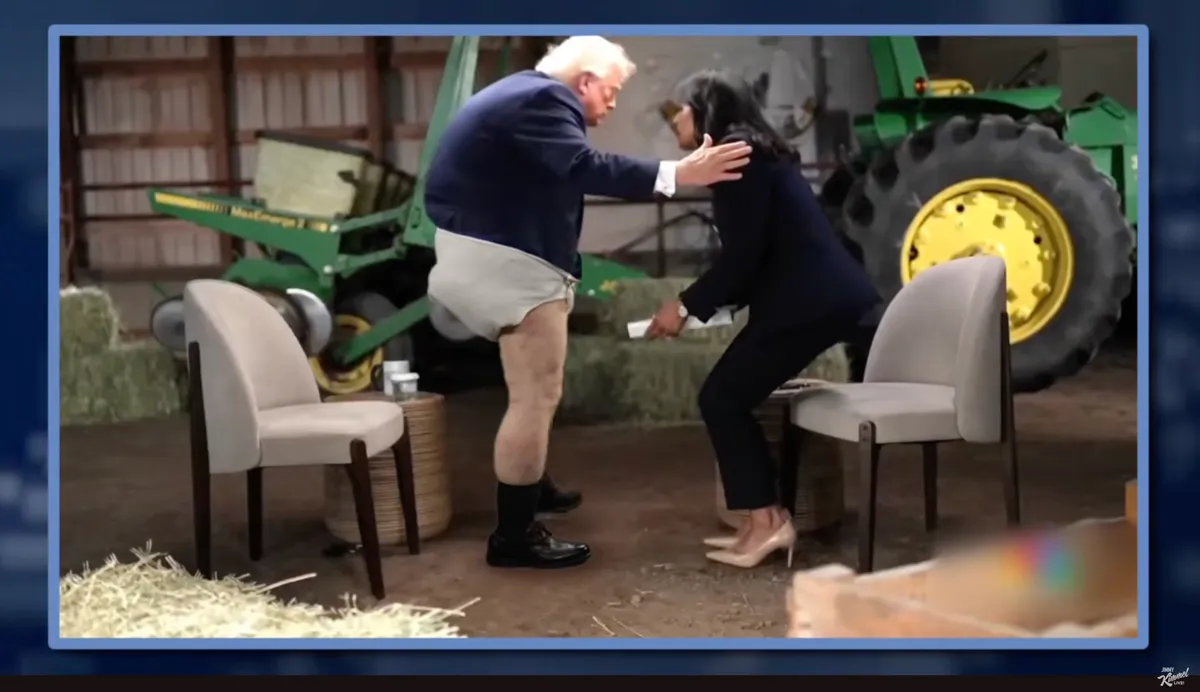
Late-night host Jimmy Kimmel has generated significant buzz by depicting former President Donald Trump in a satirical sketch, portraying him as wearing a diaper after storming out of a recent interview. The segment, which aired on Jimmy Kimmel Live, characterized Trump's abrupt departure from an on-camera interview with NBC News anchor Kristen Welker as a "hissy fit." The interview, conducted in Wisconsin, reportedly devolved when Welker pressed Trump for evidence supporting his claims of widespread election fraud in California. Trump's reaction, which included calling Welker "crooked or stupid" before disconnecting his microphone and leaving the set, became the focal point of Kimmel's comedic critique.
Kimmel presented a modified clip of the Meet the Press interview to his audience, visually depicting Trump without trousers and in a soiled diaper as he walked off camera. The host quipped, "When that dinner bell rings, he’s gone," and further commented, "Can you imagine any other president in the history of any other place doing that? That was a Trumper tantrum." The visual gag was presented as a commentary on Trump's conduct during the interview, which the former president later attributed to anger over the rainy weather and what he described as "fake news" from NBC.
Political and Media Reactions
White House Response to Kimmel's Monologue
The White House, through spokesperson Davis Ingle, issued a dismissive statement regarding Kimmel's portrayal. Ingle stated, "Nobody in their right mind cares what seriously unfunny Jimmy Kimmel thinks." This response underscores a clear adversarial relationship between the former president's camp and late-night comedy, with the administration framing Kimmel's commentary as irrelevant and lacking serious consideration. The incident highlights the ongoing tension between political figures and the entertainment media, particularly concerning satire directed at prominent political personalities.
Despite the official dismissal, the sketch quickly gained traction on social media, fueling public discourse about Trump's behavior during interviews and the role of satire in political commentary. The visual of Trump in a diaper, while intended as humor, also touches on broader themes of perceived presidential decorum and public image, themes that are frequently debated in the context of high-profile political figures.
Trump's Own Account of the Interview Exit
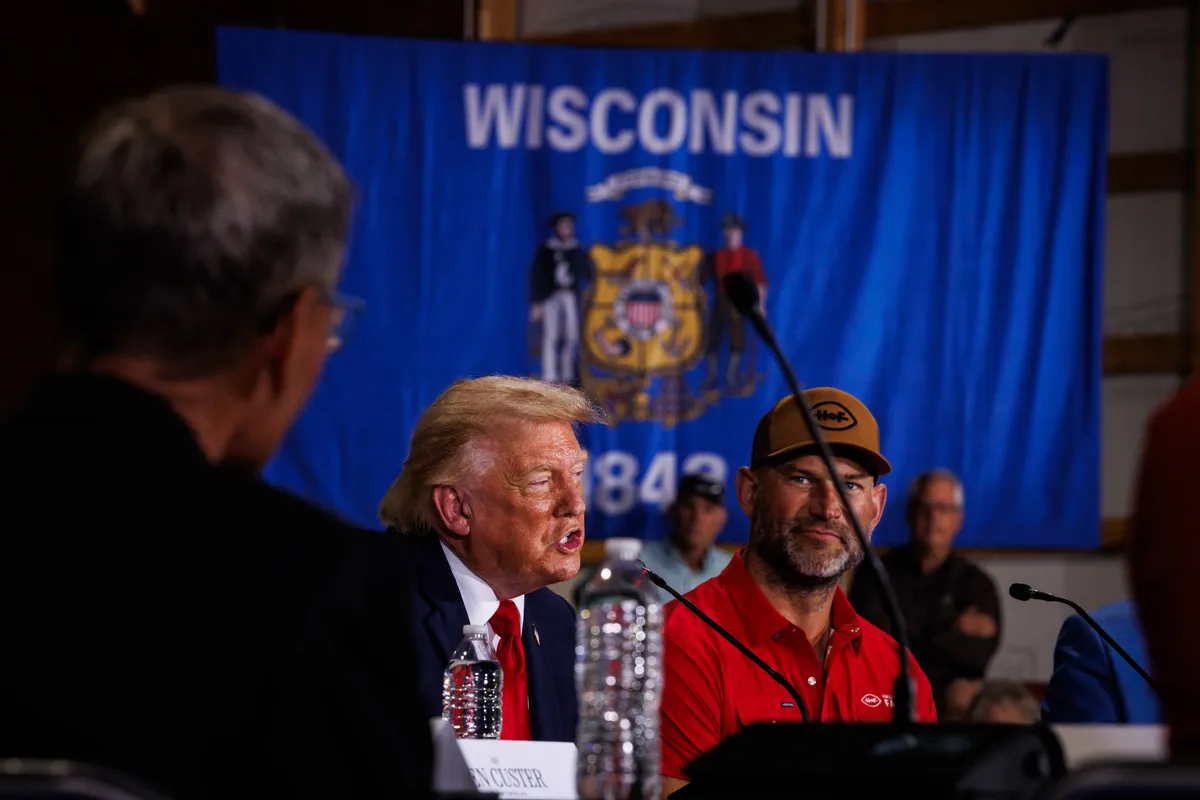
Following the televised interview, Donald Trump addressed a rally of supporters, offering his own explanation for his departure. He claimed that the inclement weather, described as rain, contributed to his agitated state. "It was raining. And it was with NBC fake news," Trump stated. "And because it was raining, I got a little bit angry at them. I was not happy with them. But we had a good time." This explanation contrasts sharply with the depiction of a "hissy fit" or "tantrum," framing his exit as a reaction to external conditions rather than an inability to withstand journalistic scrutiny.
The juxtaposition of Kimmel's satirical interpretation and Trump's personal account emphasizes the contested nature of public perception and narrative control. While Kimmel used visual hyperbole to critique Trump's actions, Trump provided a more mundane, albeit still critical, explanation focused on the circumstances of the interview. This dynamic is characteristic of how political events are often framed and re-framed by different media outlets and the individuals involved.
History of Tensions Between Trump and Kimmel
Past Criticisms and Show Suspensions
The satirical jab by Kimmel is not an isolated incident but rather a continuation of a long-standing animosity between the host and Donald Trump. Trump has publicly criticized Kimmel on multiple occasions, referring to him as "seriously unfunny" and advocating for his removal from television. This ongoing feud intensified in April when Trump reacted strongly to a monologue joke by Kimmel about First Lady Melania Trump. Trump deemed the joke "despicable" and "far beyond the pale," labeling it a "call to violence.".
Further exacerbating the tension, ABC News temporarily suspended Jimmy Kimmel Live in September. This suspension followed criticism from conservative groups and administration officials regarding Kimmel's remarks about the late conservative activist Charlie Kirk. The network's decision was met with significant backlash, leading to the show's eventual resumption of production. These instances illustrate a pattern of friction, where comments from the late-night host have drawn strong reactions from Trump and his supporters, sometimes resulting in professional repercussions.
Impact Analysis
The incident involving Jimmy Kimmel's satirical depiction of Donald Trump and the subsequent White House response underscores the symbiotic, yet often adversarial, relationship between political figures and late-night television. These exchanges serve not only as entertainment but also as arenas for shaping public perception and political discourse. Kimmel's use of exaggerated imagery, while met with derision by the Trump camp, resonates with a segment of the audience that views such satire as a form of accountability. Conversely, Trump's own explanations and counter-criticisms aim to solidify his base and challenge the narratives presented by critical media figures. The ongoing nature of these interactions suggests a continued role for late-night comedy in the political landscape, functioning as both a commentator and a provocateur.