Recent disturbances in Belfast, marked by significant destruction of homes and vehicles, gained international attention partly due to amplification on social media platforms. Among the most notable figures engaging with the events was Elon Musk, the world's wealthiest individual. His online activity, particularly on X (formerly Twitter), involved resharing politically charged posts that some critics argue fanned the flames of discontent during a period of escalating unrest.
Musk's commentary, including statements such as "Only by protesting repeatedly and loudly will there be any change!" and echoing sentiments like "You either fight back or you die," became prominent as the situation in Belfast unfolded. These remarks, shared with his vast following, contributed to the narrative surrounding the protests, which were sparked by a stabbing incident and evolved into anti-immigration demonstrations that descended into violence.
Social Media Amplification and Political Endorsements
Musk's Engagement with Political Content
As political leaders in Belfast called for calm amidst burning properties, Musk engaged with posts from figures associated with Reform UK, a British political party. He explicitly endorsed the party's message, stating, "Only Restore Britain can save Britain. It is the only way." This endorsement, made during a volatile period, drew criticism for potentially influencing public discourse on sensitive social and political issues through his significant online platform.
Musk's interaction extended to resharing a tweet from Tommy Robinson, an activist known for his involvement in far-right movements. Robinson had posted a list of protests occurring in Northern Ireland and England. Musk added his own commentary to this post, urging for "REPEATEDLY and LOUDLY" protests as a means of effecting change. This specific instance of engagement linked his platform to activist content that was being disseminated alongside news of the escalating violence in Belfast.
Tommy Robinson's Role and Narrative
Tommy Robinson was active in sharing updates from Belfast, framing the destruction through his perspective. He highlighted the burning of local businesses, suggesting that "Foreign businesses are being destroyed in Belfast." Furthermore, Robinson contended that the homes targeted in the violence were primarily Houses in Multiple Occupation (HMOs), a type of housing he has previously linked to the accommodation of asylum seekers. This narrative directly tied the unrest to anti-immigration sentiments.
Robinson also shared advice circulating on X, urging protesters to refrain from using phones and recording devices, warning that "Technology and recording devices… don’t help anyone, this is saving our country not for the powers to use it against patriots and shaft us." This suggests an awareness of the potential for digital documentation to be used in legal proceedings or to influence public perception, while simultaneously encouraging a more direct, unrecorded form of protest.
The Incident and Escalation of Violence
The Initial Attack and Subsequent Demonstrations
The riots in Belfast followed a knife attack in the north of the city on a Monday evening. The accused, a 30-year-old Sudanese national, faces charges including possession of an article with a blade or point in a public place and making threats to kill. His appearance at Belfast Magistrates’ Court was scheduled for the following Wednesday.
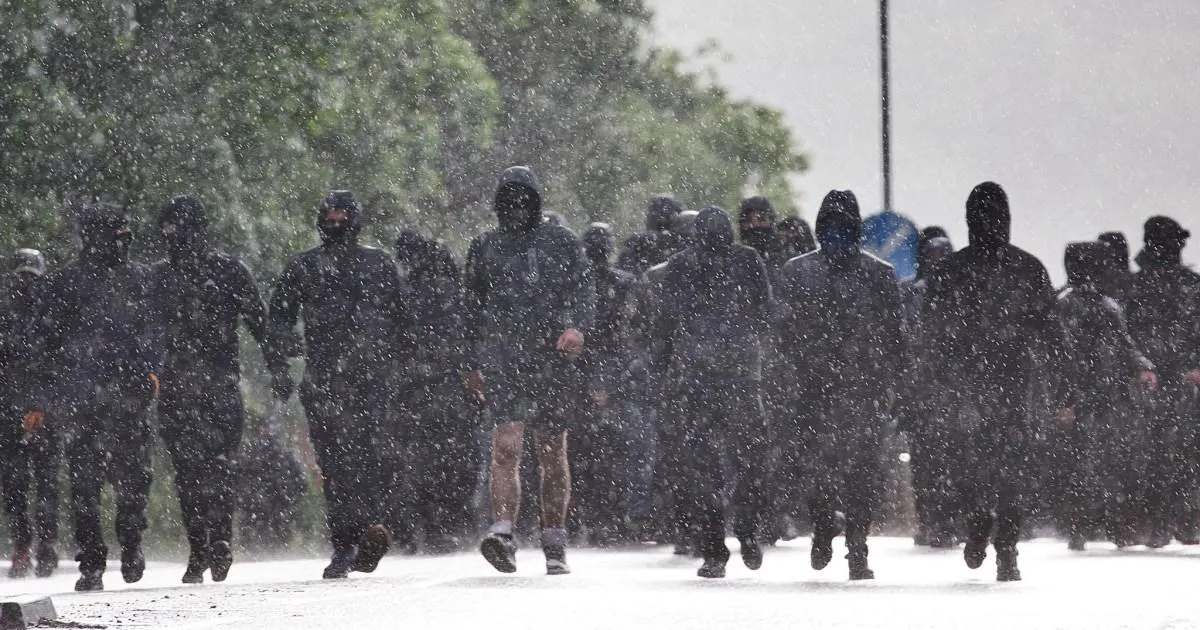
In the wake of widespread condemnation of the attack, anti-immigration demonstrations were organized across Northern Ireland on Tuesday evening. While some gatherings remained peaceful, others unfortunately devolved into significant disorder, with homes and vehicles being set ablaze, forcing residents to flee their properties.
Protests Beyond Belfast
The protests were not confined to Northern Ireland. In London, supporters of Tommy Robinson convened in Parliament Square. Their stated purpose was to protest against what they termed the "killing of Henry Novak" and the aforementioned attack in Belfast. This indicates a broader mobilization of sentiment that connected disparate events under a common banner of protest.
A reporter on the scene in London observed an event that began with approximately 50 individuals displaying the Union Flag, but quickly escalated into a more confrontational situation. Far-right protesters reportedly charged into the road, igniting red smoke flares, further underscoring the volatile nature of these demonstrations and the potential for them to turn violent.
Victim Accounts and Wider Impact
Personal Testimonies Amidst Chaos
During the unrest, individuals attending a pro-Palestine march reported being subjected to severe abuse. Two young women, Zahra Ali and Monday Rosenfeld, described experiencing an environment of intense hostility. Rosenfeld, 23, recounted to Metro, "I have genuinely never seen anything like this before. That was some of the worst abuse I have ever heard."
She further detailed threats made by men who claimed they were present "to ‘protect our women and girls’". These threats included explicit violence, such as being taken away, drowned, and beheaded, highlighting the dangerous and intimidating atmosphere that permeated the protests for some attendees.
Broader Societal Concerns
The events in Belfast and the subsequent online discourse raise critical questions about the role of social media in disseminating information, shaping public opinion, and potentially contributing to civil unrest. The influence of prominent figures like Elon Musk, whose pronouncements can reach millions, carries a significant responsibility, particularly when engaging with sensitive political and social issues. The convergence of online rhetoric with real-world actions underscores the complex challenges of managing public discourse in the digital age and mitigating the spread of inflammatory content that can incite violence and division.
Impact Analysis
The involvement of high-profile social media personalities in discourse surrounding civil unrest can have a profound impact, amplifying narratives and potentially influencing the scale and intensity of protests. This incident highlights the critical need for platform accountability and for public figures to exercise greater caution and responsibility when engaging with politically charged or potentially inflammatory content. The rapid spread of information, both accurate and misleading, via social media underscores the ongoing challenge of maintaining social cohesion and preventing the incitement of violence in an increasingly interconnected world.