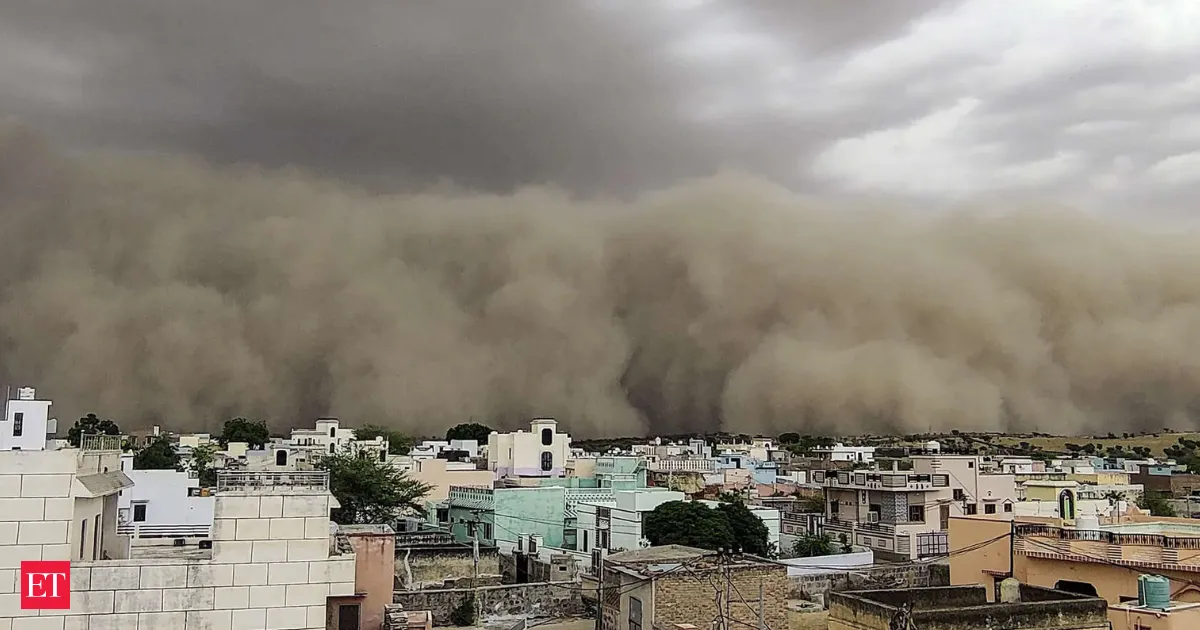
A formidable dust storm swept across numerous regions of Rajasthan on Saturday, dramatically altering the landscape and disrupting normal life. The intense weather phenomenon, characterized by towering walls of dust and sand, reduced visibility to near-zero levels, compelling motorists to activate headlights even in daylight. While the dust storms caused significant disruption, they were also accompanied by rainfall, offering a much-needed respite from the prevailing heatwave that had gripped the state.
Visuals emerging from Bikaner, Lunkaransar, Fatehpur, and other affected areas depicted an apocalyptic scene as the dust clouds engulfed towns and cities. This dramatic weather event was primarily attributed to a Western Disturbance, impacting districts such as Churu, Hanumangarh, Sri Ganganagar, Bikaner, Nagaur, Didwana-Kuchaman, Alwar, Sikar, and Jaipur. The strong winds, reaching speeds of up to 56 kmph in some areas like Hanumangarh and Sri Ganganagar, uprooted trees and caused damage to infrastructure, leading to widespread power outages.
Dust Storm Unleashes Apocalyptic Scenes Across Rajasthan
The dust storm's intensity was particularly notable in Bikaner, where residents described the sky turning dark as if night had fallen. The phenomenon lasted for approximately 10 minutes in Jaipur, preceding a period of rainfall. According to meteorological reports, a severe dust storm with wind speeds estimated at 70-80 kmph traversed northwest Rajasthan during the afternoon. Areas like Sri Ganganagar, Churu, and Bikaner experienced widespread dust storms, while dense dust clouds blanketed Fatehpur and Laxmangarh in the Sikar district, leaving inhabitants in awe and disbelief at the altered surroundings.

Local accounts from Churu highlighted the unprecedented nature of the event. One resident shared with PTI Videos, "We never imagined such a massive dust storm would engulf the city. It is the first time we have witnessed such an intense storm. The sky turned dark around 2 pm, almost like nightfall. People are driving with headlights on, and normal life has been severely disrupted." This sentiment was echoed across multiple communities experiencing the brunt of the storm.
Impact and Meteorological Factors
The weather system responsible for the dust storm was identified as a Western Disturbance, a crucial factor in the region's meteorological patterns. Its interaction with local atmospheric conditions led to the formation and intensification of the dust storm. The strong winds associated with the disturbance were the primary drivers, lifting vast quantities of sand and dust from the arid and semi-arid regions of Rajasthan.

Beyond the dramatic visual impact, the dust storm brought a tangible change in weather conditions. Rainfall was recorded in several parts of the state. Churu registered 14.8 mm of rain, Pilani received 10.4 mm, and Sangaria in Hanumangarh recorded 3.5 mm. This precipitation, while perhaps a secondary effect of the larger weather system, provided much-needed relief from the high temperatures that had characterized the preceding days. The juxtaposition of the intense dust storm followed by cooling rains presented a complex and dynamic weather scenario for the region.
Infrastructure and Daily Life Disruptions
The physical impact of the storm extended to infrastructure and the daily routines of residents. Uprooted trees and damage to electrical infrastructure were reported in several areas, leading to power disruptions. The drastically reduced visibility significantly hampered transportation, forcing vehicles to a crawl and increasing the risk of accidents. The sheer volume of dust entering homes and public spaces also posed challenges for maintaining hygiene and air quality.
Emergency services and local authorities likely faced increased operational demands during and immediately after the storm. Managing the aftermath, including clearing debris and restoring power, would have been a priority. Social media platforms were flooded with images and videos of the dust storm, showcasing its scale and the public's reaction, ranging from awe to concern about safety and disruption.
Broader Implications and Future Outlook
While this particular dust storm was a significant event, it also serves as a reminder of the dynamic and sometimes extreme weather patterns that can affect arid and semi-arid regions. Understanding the meteorological triggers, such as Western Disturbances, and their potential impact is crucial for disaster preparedness and urban planning in such areas. The interplay between heatwaves and subsequent dust storms, followed by rain, highlights the complex climatic conditions prevalent in Rajasthan.
The respite from the heatwave brought by the rainfall is temporary, and forecasting future weather patterns will remain critical for the region. Continued monitoring of atmospheric conditions and the potential for similar events is necessary. The economic impact, though not detailed here, would involve costs related to infrastructure repair, agricultural losses if any, and the general disruption to commerce and daily economic activities.