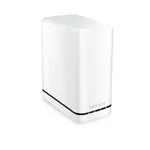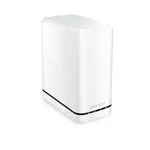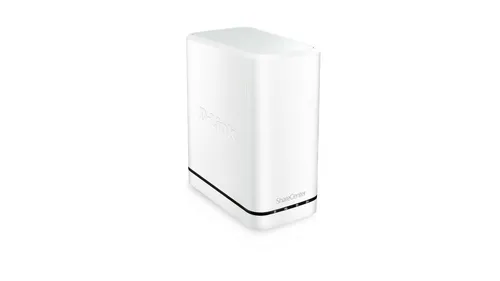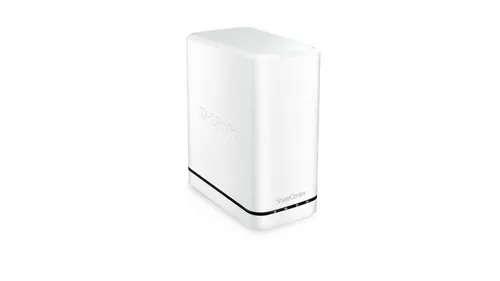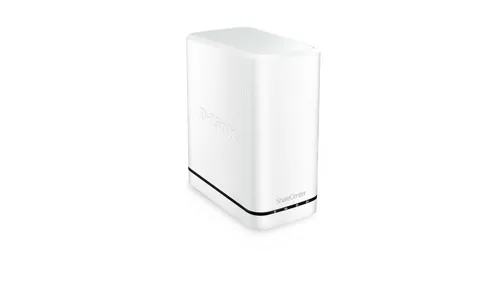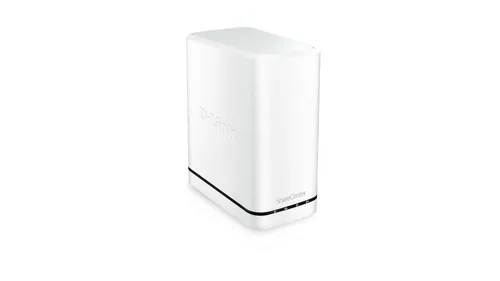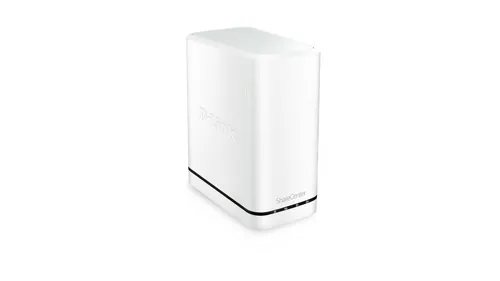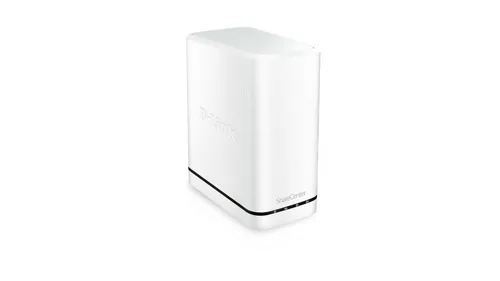


D-Link DNS-320LW 2-Bay Personal Cloud NAS
Specifications
Performance
Performance
| Built-in storage media |
Yes
58% have it
|
|---|---|
| Internal storage capacity |
8
TB
83% better than others
|
| Storage media |
HDD
|
| Number of storage drives installed |
2
|
| File format system |
FAT32/NTFS
|
Ports & interfaces
Ports & interfaces
| Ethernet LAN |
Yes
93% have it
|
|---|---|
| Ethernet LAN data rates |
10,100,1000 Mbit/s
|
| USB connectivity |
Yes
74% have it
|
| USB 2.0 ports quantity |
1
|
Design
Design
| Product colour |
White
|
|---|
Weight & dimensions
Weight & dimensions
| Width |
90
mm
25% better than others
|
|---|---|
| Depth |
144.3
mm
64% better than others
|
| Height |
193.3
mm
58% better than others
|
Certificates
Certificates
| Digital Living Network Alliance (DLNA) certified |
Yes
88% have it
|
|---|
Disclaimer: Information on this page may need review. If you notice any discrepancies, please report them

The D-Link DNS-320LW represents a foray into the personal cloud storage market, offering a straightforward solution for users seeking to centralize their digital content and access it remotely. Designed with simplicity in mind, this 2-bay NAS aims to provide a blend of local storage accessibility and the convenience of cloud-like features without the recurring subscription fees often associated with public cloud services. Its appeal lies in its potential to serve as a central hub for backups, media streaming, and file sharing within a home or small office network.
While not a powerhouse of cutting-edge technology, the DNS-320LW leverages its dual drive bays to offer expandable storage capacity, supporting RAID configurations for data redundancy. The inclusion of Gigabit Ethernet ensures reasonably fast local network transfers, a crucial factor for any NAS device. For users new to Network Attached Storage, D-Link's emphasis on ease of setup and management is a notable consideration. However, the true value proposition of the DNS-320LW hinges on its ability to deliver reliable performance and adequate features for its intended user base, particularly when compared against more feature-rich or performance-oriented competitors in the crowded NAS market.
Key Features and Performance Analysis
At its core, the D-Link DNS-320LW is built around its 2-bay architecture, allowing for the installation of two SATA hard drives. This dual-bay design is fundamental to its functionality, enabling users to configure the drives in various modes, including JBOD (Just a Bunch Of Disks) for maximum capacity or RAID 1 for mirroring, which provides data protection against a single drive failure. The device is equipped with a Gigabit Ethernet port, promising theoretical maximum transfer speeds of up to 1000 Mbps for local network access. This is essential for tasks like transferring large media files or performing system backups efficiently. Remote access is facilitated through D-Link's own cloud service, allowing users to connect to their NAS from outside their home network, provided the device is properly configured and connected to the internet. The inclusion of DLNA media server functionality means that stored movies, music, and photos can be streamed directly to compatible smart TVs, game consoles, or other media players on the network, enhancing its utility as a home entertainment hub.
User Experience and Software
The user interface for the DNS-320LW is designed to be intuitive, aiming to simplify the often complex world of NAS management. Initial setup typically involves installing the hard drives, connecting the device to the network, and running a setup wizard. D-Link's management software provides access to various settings, including user account management, shared folder creation, and backup scheduling. For remote access, users are generally guided through setting up an account with D-Link's cloud service, which then links to their specific NAS device. While this approach simplifies remote connectivity, it also introduces a dependency on D-Link's infrastructure. Features like integrated download clients or advanced surveillance capabilities might be less robust compared to higher-end NAS solutions, positioning the DNS-320LW more as a personal file server and media streamer rather than a comprehensive business-grade storage solution.
Pros & Cons
Pros
What we love about this product
- Dual-Bay Storage: Supports two SATA hard drives, allowing for expandable storage up to the capacity of the installed drives.
- RAID Support: Offers RAID 1 mirroring for data redundancy, protecting against single drive failure and enhancing data security.
- Gigabit Ethernet: Equipped with a 10/100/1000 Mbps Ethernet port for fast local network data transfers.
- Remote Access Capability: Enables access to files and media from outside the home network via D-Link's cloud service.
- DLNA Media Server: Built-in DLNA support allows for seamless streaming of media content to compatible devices on the network.
Cons
Points to consider before buying
- Limited Processing Power: While specific CPU details aren't provided, typical devices in this class often have entry-level processors, potentially leading to slower performance under heavy load or with multiple simultaneous tasks.
- Basic Software Feature Set: May lack advanced features found in higher-end NAS devices, such as extensive app ecosystems, robust download clients, or advanced surveillance options.
- Dependency on D-Link Cloud Service: Remote access functionality relies on D-Link's proprietary cloud infrastructure, which could be a concern for users prioritizing complete independence.