

Deep Dive: Architecting Intelligent Systems with Gateways and Controllers
Understanding the Technical Core of Gateways & Controllers
Gateways and controllers are fundamental to modern industrial infrastructure, enabling the crucial convergence of operational technology (OT) with information technology (IT) systems. While often discussed collectively, their primary functions differ distinctively: controllers are engineered to execute real-time operational logic and manage physical I/O directly, whereas gateways specialize in data aggregation, protocol translation, and secure communication, acting as intelligent bridges between heterogeneous network segments.
The Role of Industrial Gateways
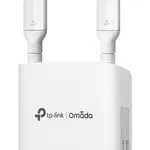
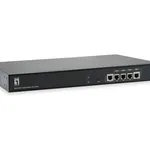
Industrial gateways are meticulously designed to facilitate robust data flow between disparate networks and devices, frequently bridging legacy systems with contemporary cloud platforms or enterprise applications. Their core functionality revolves around sophisticated protocol conversion, meticulously transforming data from diverse fieldbus protocols like Modbus RTU, Profibus, CAN, or DeviceNet into Ethernet-based protocols such as Modbus TCP, OPC UA, MQTT, or even standard HTTP/REST. This precise translation is absolutely critical for achieving seamless interoperability in complex, heterogeneous environments. Beyond mere conversion, advanced edge gateways integrate substantial processing power and memory, enabling extensive data pre-processing, filtering, and aggregation directly at the source. This inherent edge intelligence significantly reduces network traffic, minimizes latency for time-sensitive insights, and inherently enhances data security by processing sensitive information locally before secure transmission. Features like local data storage, integrated time-series databases, and sophisticated basic analytics capabilities are becoming standard, empowering localized decision-making and resilient offline operation.
The Power of Industrial Controllers
Industrial controllers, encompassing Programmable Logic Controllers (PLCs), Programmable Automation Controllers (PACs), and Remote Terminal Units (RTUs), represent the veritable backbone of automated processes. Their paramount purpose is to execute deterministic control logic, directly managing actuators, sensors, and machinery with real-time precision. PLCs are renowned for their exceptional robustness, reliability, and relative ease of programming via ladder logic or function block diagrams, rendering them supremely ideal for discrete manufacturing and intricate process control applications. PACs offer significantly more advanced capabilities, seamlessly combining core PLC features with the flexibility and computational power akin to an industrial PC, often supporting multiple programming languages (compliant with IEC 61131-3) and complex control algorithms, including advanced motion control and sophisticated process control loops. RTUs are specifically tailored for remote monitoring and control in geographically dispersed and often challenging applications, typically featuring resilient communication options like cellular or satellite, coupled with ultra-low power consumption. The judicious selection of a controller is heavily dependent on the required scan time, I/O count, processing complexity, and the prevailing environmental conditions. Modern controllers are increasingly integrating advanced diagnostic tools, secure communication modules, and even embedded web servers for comprehensive remote visualization and efficient configuration.
Synergy and Security in Converged Architectures
In a multitude of complex industrial applications, gateways and controllers operate in intricate tandem. Controllers meticulously manage the immediate, real-time physical processes, while gateways intelligently collect operational data from these controllers (and other auxiliary sensors), normalize it, and securely transmit it to higher-level systems for comprehensive analysis, archiving, and intuitive visualization. This symbiotic relationship forges a powerfully robust architecture where local control integrity is impeccably maintained, and invaluable operational data is strategically leveraged for broader business intelligence initiatives and proactive predictive maintenance strategies. Cybersecurity is an absolute imperative in these increasingly converged OT/IT environments. Gateways frequently function as the critical first line of defense, incorporating advanced features such as integrated firewalls, robust VPN capabilities, secure boot mechanisms, sophisticated intrusion detection systems, and stringent authentication mechanisms to assiduously protect industrial networks from external and internal threats. Controllers are also undergoing significant evolution to include enhanced security features, such as cryptographically signed firmware updates and secure communication protocols, recognizing their indisputable and critical role in operational safety, security, and continuous uptime. The effective integration, meticulous configuration, and secure deployment of these indispensable devices are non-negotiable prerequisites for constructing resilient, exceptionally efficient, and truly future-proof industrial systems.