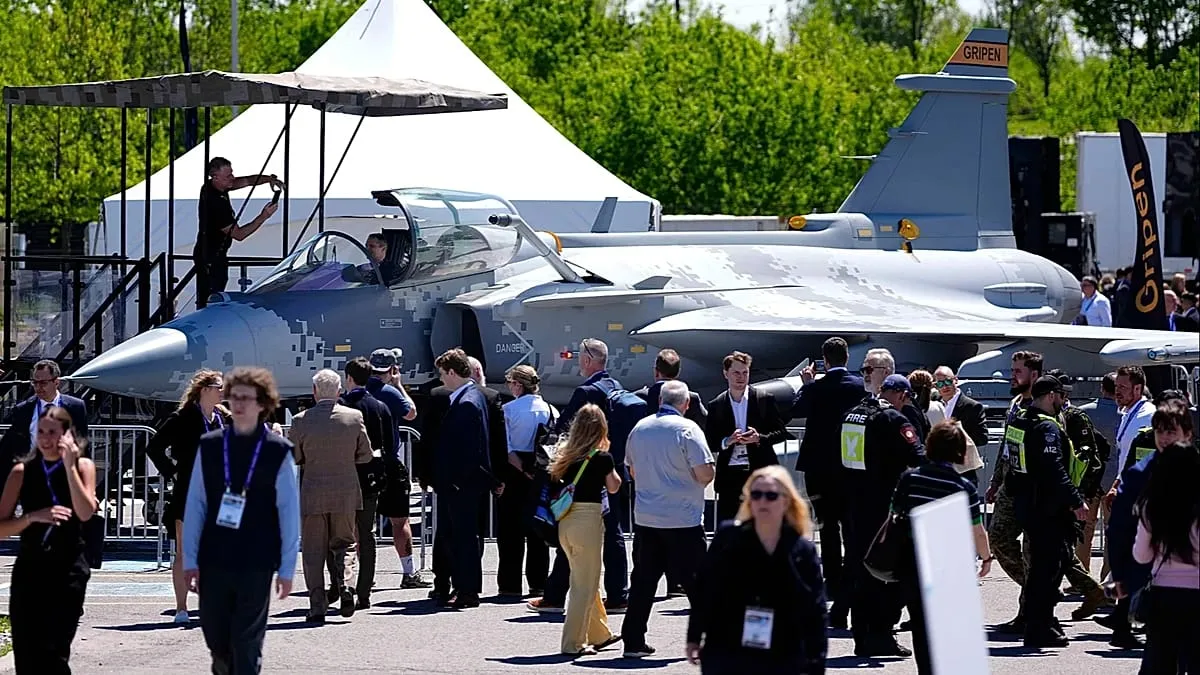
Canada has officially moved forward with the procurement of advanced Arctic surveillance aircraft from the Swedish firm Saab, bypassing American competitors in a significant defense deal. Prime Minister Mark Carney announced the decision, highlighting it as a dual-purpose strategy to bolster Canada's defense capabilities in the strategically vital Arctic region while simultaneously fostering economic diversification away from its traditional reliance on the United States. This selection marks a notable shift in Canada's defense procurement, signaling a broader geopolitical and economic realignment.
The decision to enter formal negotiations with Saab for its GlobalEye surveillance aircraft means that two US-based alternatives, namely the Aeris X from L3Harris and the E-7 Wedgetail by Boeing, have been sidelined. This move is underpinned by a strategic imperative articulated by Prime Minister Carney, who stated the GlobalEye procurement will serve the dual objectives of securing Canada's northern territories and stimulating domestic economic growth. The selection is poised to strengthen Canada's presence and oversight in the Arctic, an area experiencing increased geopolitical interest and competition.
Canadian Arctic Surveillance Modernization
The Canadian government has identified the Arctic as a critical strategic priority, acknowledging the urgent need to enhance its defense posture in the region. Rising geopolitical tensions and the increased activity of other nations, particularly Russia, in the Arctic necessitate advanced surveillance and response capabilities. The selection of Saab's GlobalEye platform is seen as a crucial step in meeting these evolving security challenges. The GlobalEye is a versatile airborne early warning and control (AEW&C) aircraft, equipped with sophisticated radar and sensor systems, making it ideal for monitoring vast and remote areas like the Canadian Arctic.
Saab's commitment to transferring knowledge and technology to Canada was a key factor in the decision. This approach aligns with Canada's broader economic strategy to cultivate and expand its domestic defense industry. By partnering with Saab, Canada aims to develop local expertise, create high-value jobs, and build a more self-sufficient defense sector. This strategy not only enhances national security but also contributes to long-term economic resilience and innovation within the country.
Geopolitical Implications and US Relations
Prime Minister Carney's decision to select a Swedish firm over American competitors could potentially exacerbate existing tensions with the administration of US President Donald Trump. This comes at a time when Canada-US relations have already been strained by Ottawa's earlier reconsideration of a deal for F-35 fighter jets, a move that drew significant criticism from Washington. The US Department of Defense has previously expressed frustration, even suspending cooperation on a joint defense advisory board, citing the F-35 situation as a contributing factor.
Carney has been vocal about the fundamental shift in the Canada-US relationship, asserting that historical ties will not revert to a pre-Trump era. He emphasizes the need for Canada to actively diversify its economic and security partnerships beyond the United States. This strategic diversification aims to create a more balanced and robust foreign policy, reducing vulnerability to external political pressures and fostering stronger alliances with a broader range of international partners, including European nations.
Economic Diversification Strategy
Beyond the immediate defense benefits, the procurement from Saab is intrinsically linked to Canada's broader economic diversification agenda. The commitment to technology and knowledge transfer is expected to stimulate significant investment in Canada's aerospace and defense sectors. This could lead to the establishment of new research and development facilities, advanced manufacturing capabilities, and specialized training programs, all contributing to a more robust and competitive Canadian economy.
By actively seeking and securing defense contracts with non-US partners, Canada is signaling its intent to foster a more independent economic future. This approach aims to mitigate risks associated with over-reliance on a single trading partner and to capitalize on emerging global markets. The Saab deal represents a concrete step in this direction, demonstrating Canada's capacity to engage in complex, high-value international partnerships that yield tangible economic benefits and strengthen national sovereignty.
Impact Analysis
The decision to award the Arctic surveillance aircraft contract to Saab, a Swedish defense company, represents a significant strategic pivot for Canada. On the security front, it enhances Canada's ability to monitor and protect its vast Arctic territory, a region of growing geopolitical importance. This move underscores Canada's commitment to modernizing its military capabilities to address contemporary threats and territorial integrity concerns in the North. The integration of Saab's GlobalEye technology is expected to provide superior situational awareness and operational effectiveness.
Economically, this procurement signals a deliberate effort by the Canadian government to diversify its international partnerships and reduce its heavy reliance on the United States. By fostering a relationship with Sweden and Saab, Canada aims to stimulate its domestic defense industry through technology transfer and joint development initiatives. This strategic diversification not only strengthens Canada's economic base but also reinforces its autonomy on the global stage, allowing it to pursue a more independent foreign policy and build a broader network of reliable international allies beyond its immediate neighbor.