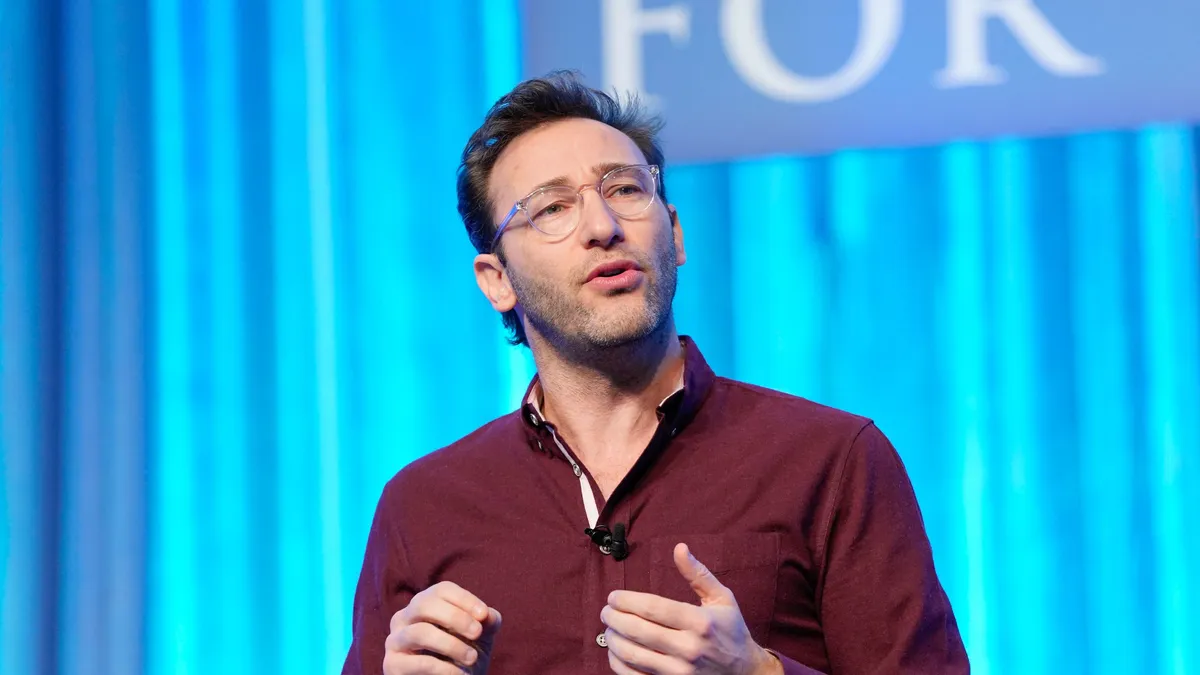
In a quest to move beyond mere task completion and delve into the 'why' behind his work, an individual experimented with ChatGPT, prompting the AI to adopt the principles of leadership expert Simon Sinek. This unconventional approach involved analyzing personal workload, daily habits, and responsibilities through Sinek's renowned "Start With Why" philosophy. The objective was to identify tasks misaligned with purpose, distinguish between genuine meaning and the pursuit of productivity for its own sake, and pinpoint activities that truly resonate with core motivations and long-term aspirations. By granting AI permission to audit his work methods, the experiment aimed to uncover inefficiencies and foster a more purposeful approach to daily professional life.
The insights generated by ChatGPT proved to be both challenging and transformative, fundamentally reshaping the individual's perspective on workflow optimization. The AI's analysis, leveraging Sinek's framework, highlighted a significant tendency towards reactive work rather than proactive creation. This realization, though uncomfortable, served as a catalyst for re-evaluating priorities and the underlying drivers of professional activity. The experiment demonstrated the potential of AI, when combined with established philosophical models, to offer profound self-reflection and actionable strategies for enhancing work-life integration and effectiveness.
Applying 'Start With Why' Through AI

The precise prompt utilized for this AI-driven introspection was designed to elicit a deep analysis of current work patterns against Sinek's framework: "Analyze my current workload, habits, and daily responsibilities through the lens of Simon Sinek’s ‘Start With Why’ philosophy. Identify where my work feels disconnected from purpose, where I may be chasing productivity instead of meaning, and which tasks align most closely with my deeper motivations, strengths, and long-term goals. Then suggest ways to restructure my workflow around clarity, impact, and fulfillment instead of pure output."
Leveraging ChatGPT's memory capabilities, the AI quickly identified a significant pattern of reactive behavior, a critical blind spot that the user had been overlooking. This introspection revealed a profound tendency to expend considerable mental energy responding to immediate stimuli rather than engaging in proactive, purposeful creation. While specific details were personal, the core finding pointed towards an unsustainable workflow optimized for stress avoidance rather than meaningful output.
Identifying "False Productivity" with AI Assistance

The AI flagged several detrimental patterns that contributed to this perceived lack of progress:
- Context-switching: Frequent shifts between tasks disrupt focus and diminish efficiency.
- Urgency trap: Prioritizing incoming notifications over the completion of current, more important tasks.
- Metric fallacy: Relying on a single, potentially superficial, measure of success.
- Inbox creep: Allowing email checks to interrupt dedicated work periods.
These habits, according to ChatGPT, fostered an illusion of productivity by focusing on busywork rather than impactful contribution. The AI's analysis suggested that the individual was optimizing for stress avoidance, leading to a cycle of reactive behaviors that undermined genuine progress. The core issue identified was the lack of a consistent, purpose-driven approach to task management.
A critical shift emerged when the user began filtering tasks through the question, "Why does this task matter?" This reorientation contrasted sharply with the typical defensive queries, such as "Will this take five minutes?" or "Can I finish this quickly?" By applying Sinek's philosophy, many activities previously considered productive were reclassified as mere distractions or "noise" when their underlying purpose was not clearly aligned with long-term objectives.
ChatGPT's recommendations included a significant workflow restructuring, emphasizing deep, uninterrupted focus sessions, establishing firm communication boundaries, and prioritizing creation over reaction. While this advice is not novel, its presentation through the "Start With Why" framework provided a compelling rationale for its adoption. The AI's analysis prompted a self-assessment of energy allocation, encouraging a focus on projects that genuinely contribute to long-term growth and identifying tasks that energize versus those that deplete cognitive resources.
The Role of AI in Fostering Intentionality
The experiment highlighted an often-underestimated application of generative AI: its capacity to facilitate self-reflection. By integrating a robust philosophical model like "Start With Why," ChatGPT acted as a powerful tool for identifying personal blind spots in work habits. This approach moved beyond simply seeking faster methods and instead encouraged a more intentional engagement with work, driven by purpose rather than output metrics.
Ultimately, the user found that by shifting focus from task completion volume to the underlying 'why' of each activity, a more sustainable and impactful work rhythm was achieved. This AI-assisted introspection led to a significant reduction in wasted cognitive energy on non-essential tasks, paradoxically increasing overall productivity by fostering greater clarity and purpose. The exercise underscored the value of leveraging AI not just for task execution, but for critical self-assessment and strategic workflow refinement.