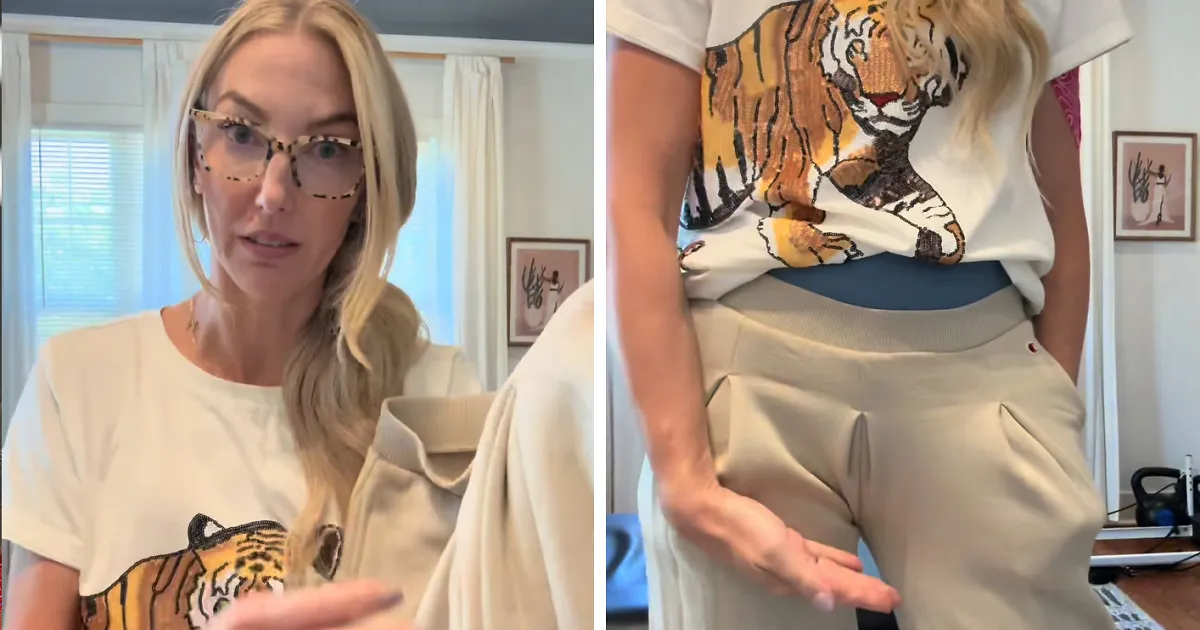
A viral social media post has ignited a firestorm of commentary surrounding a peculiar design choice on a pair of women's track pants sold at Target. The garments, quickly dubbed "coochie pants" by amused and bewildered online users, feature a prominent center pleat that, when worn, uncannily resembles female genitalia. This design quirk has left consumers questioning the product development and approval process.
The issue was brought to light by Marcy Crouch, a women's health specialist, who documented her discovery in a video that has since garnered significant attention. Crouch, holding up a pair of the beige pants, directly questioned the rationale behind the design, urging the designers to "do better." Her candid reaction and the evident awkwardness of the feature have resonated with thousands, sparking widespread discussion about fashion design and inclusivity.
The "Coochie Pants" Phenomenon
The pants in question are reportedly part of a collaboration between Target and the sportswear brand Champion, retailing at approximately $30. The central design element, a vertical pleat situated in the pelvic area, has drawn comparisons to vulvar anatomy, leading to the now-infamous nickname. The humor and incredulity expressed online stem from the shared sentiment that such a distinctive and potentially embarrassing design feature would likely have been noticed and rectified by a more diverse design and testing team.
Crouch's initial video highlighted the stark visual resemblance, and her plea for better design practices underscored a broader concern about representation in the fashion industry. The pants' beige color further accentuated the peculiar design, leading to playful yet pointed jokes on social media platforms and forums where the video was shared.
Consumer Reactions and Speculation
Online reactions have ranged from outright disbelief and amusement to outright criticism. Many users on platforms like Reddit and X (formerly Twitter) expressed astonishment that the pants made it through the design, prototyping, and approval stages. A common sentiment was the suggestion that "no women were on the design or product testing team," implying a disconnect between the creators and the target audience.
Humorous commentary flooded social media, with users making witty remarks such as, "Ma’am please ask your vagina to stop staring at me," and "Those are just the new C*mel Toe Chinos. It’s called fashion sweetie. Look it up." This widespread engagement highlights how a seemingly minor design flaw can capture public attention and generate significant viral buzz, turning a simple apparel item into a cultural talking point.
The Role of AI in Fashion Design
Amidst the discussion, some consumers speculated that the unusual design could be attributed to the increasing use of Artificial Intelligence (AI) in fashion. The idea that an AI might have generated such an odd design, bypassing human oversight, was a recurring theme. This theory is supported by industry trends where generative AI is being adopted to streamline design processes, visualize new patterns, and explore creative avenues.
Consultancy firm McKinsey has projected substantial financial benefits from AI integration in the fashion sector, estimating it could add billions to operating profits. While AI offers potential for innovation, this incident raises questions about the necessity of robust human oversight and diverse perspectives in the AI-assisted design workflow to prevent such unintended and awkward outcomes.
Broader Design Implications
Beyond the immediate humor, the incident brings into focus critical aspects of product design, particularly in apparel. The core of the criticism centers on the lack of inclusive design processes. Whether intentional or accidental, the prominent pleat's unfortunate resemblance has led to the product being perceived as unflattering and poorly conceived by many potential customers.
User reviews on Target's website echoed Crouch's concerns, with several customers describing the design as "unflattering," "strange," "horrible," and "terrible." Many cited the "huge pleat cut at the crotch" as the primary issue, leading to returns and further fueling the online discussion. This collective feedback underscores the importance of user testing and diverse design teams in ensuring that products meet consumer expectations and avoid unintended aesthetic missteps.