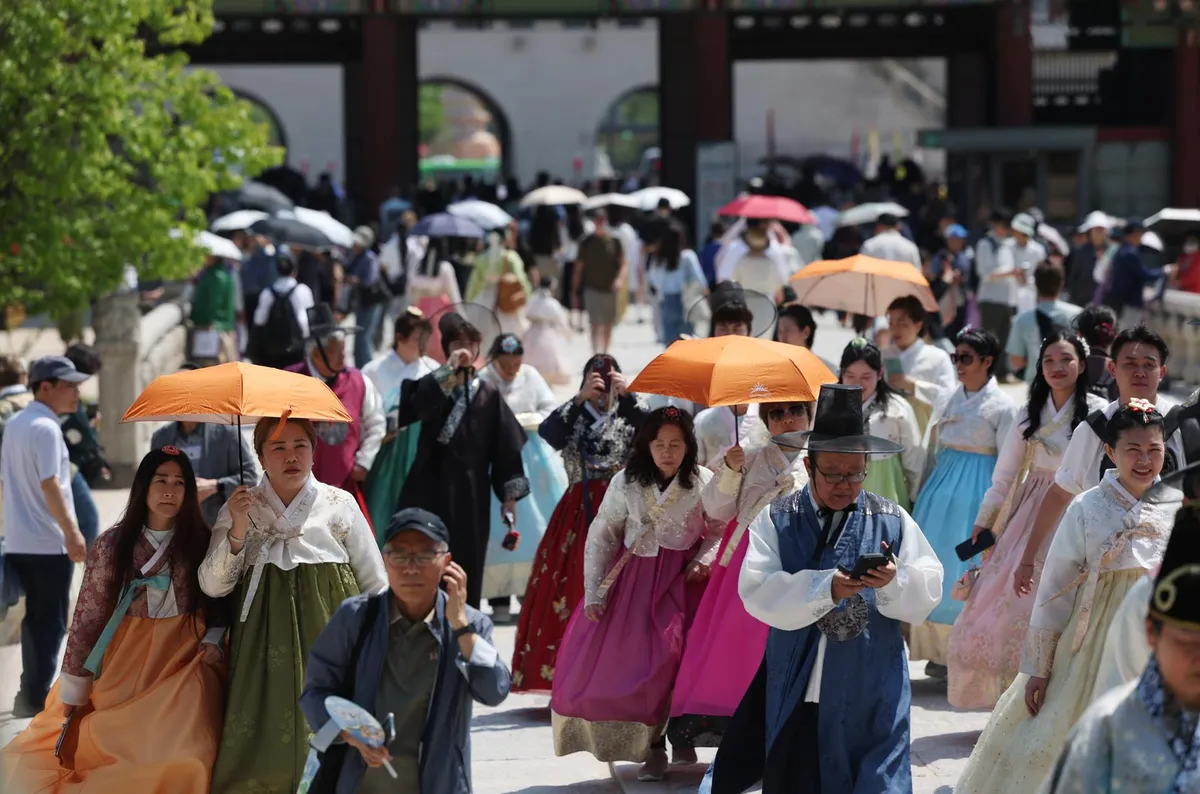
South Korea's tourism sector is experiencing an unprecedented surge, with April marking the second consecutive month that inbound visitor numbers have surpassed the two million mark. This sustained growth trajectory has established a new record pace for the nation's tourism industry, underscoring the global appeal of its cultural offerings and effective promotional strategies. The Ministry of Culture, Sports and Tourism reported that 2.03 million foreign travelers entered the country in April, a significant 19 percent increase compared to the 1.71 million recorded during the same period last year.
This latest figure builds upon the momentum from March, which saw monthly inbound tourism exceed two million visitors for the first time in history. Cumulatively, from January through April, South Korea welcomed 6.77 million foreign visitors. This represents a robust 21 percent year-on-year increase from the 5.58 million visitors recorded in the first four months of the previous year, marking the highest four-month total on record. This sustained influx indicates a strong recovery and expansion of international travel to the country.
Record Inbound Tourism Driven by Asian Markets and K-Culture Influence
The primary drivers behind this remarkable surge are a combination of the pervasive global influence of Korean popular culture, often referred to as K-culture, and a consistent demand from key Asian markets. In April, Chinese travelers constituted the largest demographic, with 574,283 arrivals, highlighting the continued importance of this market for South Korean tourism. Japanese visitors followed closely, accounting for 304,053 arrivals. The sustained high numbers from these neighboring countries are critical to the overall tourism economy.
Further reinforcing the breadth of this growth, significant numbers of visitors were recorded from Taiwan (192,854) and Hong Kong (70,802). The positive trend extends beyond East Asia, with notable growth reported from long-haul markets. The Americas and Europe collectively contributed over 419,000 visitors in April alone. This diversification of source markets indicates a broadening international appeal for South Korea as a travel destination.
Factors Influencing and Supporting Tourism Growth
Despite prevailing global economic headwinds, such as rising oil prices and increased fuel surcharges linked to geopolitical instability in the Middle East, the surge in tourism appears largely unaffected. Ministry officials indicated that pre-existing travel plans, likely booked well in advance, seem to have superseded these concerns for most international travelers. This suggests a resilient demand for travel to South Korea, driven by factors beyond short-term economic fluctuations.
Government initiatives aimed at decentralizing tourism are also showing tangible results. In April, foreign arrivals through regional airports saw a substantial increase of 38 percent compared to the previous year, reaching 355,376. This growth reflects successful efforts to distribute tourism demand beyond the heavily trafficked Seoul metropolitan area and promote regional attractions. The ministry is committed to further enhancing this trend by strengthening international flight routes to regional airports and facilitating smoother transit connections from Incheon International Airport to other parts of the country.
Economic Impact and Future Outlook
The economic contribution of this booming tourism sector is substantial. The ministry estimates that foreign visitors spent approximately 1.9 trillion Korean won (about $1.4 billion USD) domestically in April. This figure, which includes expenditures on goods and services, as well as online purchases, represents the highest monthly total recorded since the commencement of detailed tracking in 2018. This substantial inflow of foreign currency is a significant boost to the South Korean economy.
Kang Jung-won, Director General for Tourism Policy at the Ministry of Culture, Sports and Tourism, attributed the impressive figures to the synergistic effect of K-culture's global allure and dedicated government support for the tourism industry. The coordinated efforts in promoting cultural content and enhancing travel infrastructure appear to be yielding significant returns, setting a positive outlook for the sector's continued growth and its role in the national economy.