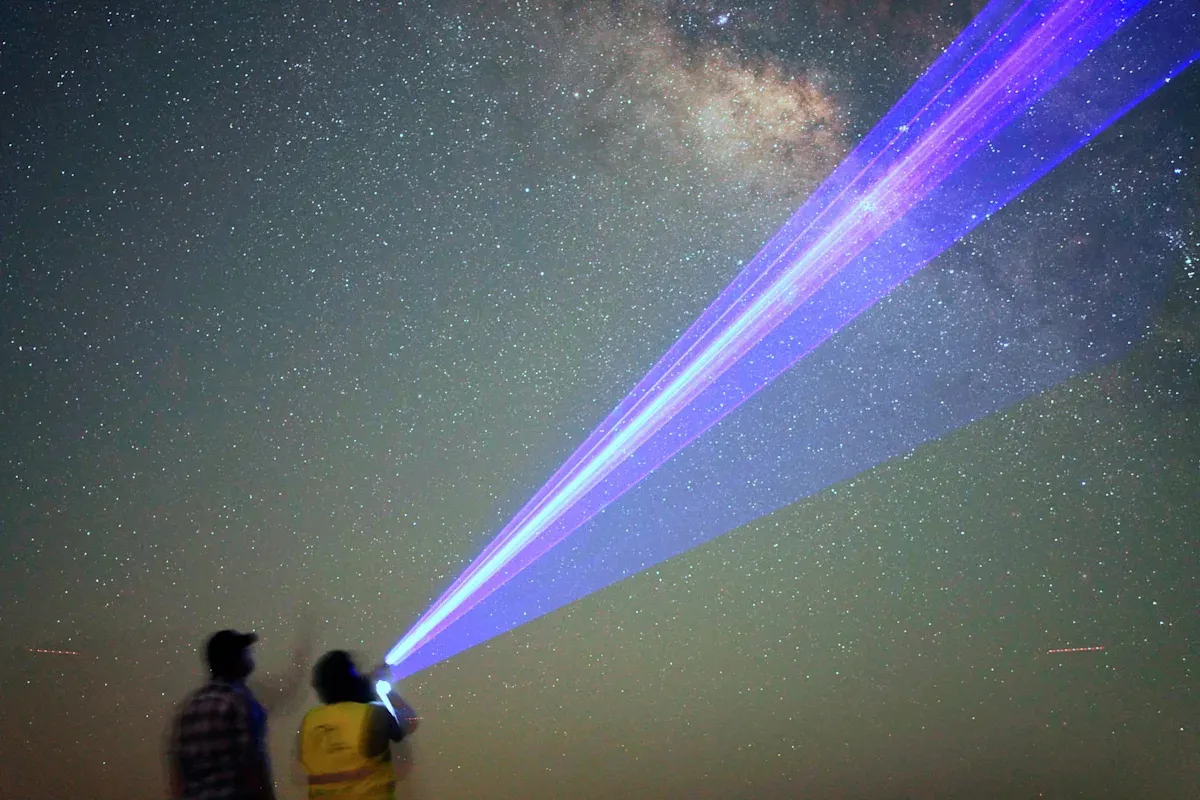
The United Arab Emirates, a nation renowned for its rapid development and futuristic urban landscapes, is also rediscovering its connection to the cosmos. While modern infrastructure and city lights have transformed the Arabian Peninsula, they have also obscured the celestial views that once guided ancient Bedouin travelers. To combat this growing issue of light pollution, the Dubai Astronomy Group is actively engaging the public with nighttime excursions to remote locations, aiming to reintroduce the wonder of the Milky Way to residents and visitors alike.
These initiatives are particularly vital in regions facing significant light pollution, with studies indicating that a vast majority of the UAE's population can no longer see the Milky Way from their homes. By organizing trips to designated dark sky areas, the group provides a crucial opportunity to reconnect with the natural night sky, fostering an appreciation for astronomy and our place within the galaxy. These events serve as a stark contrast to the urban glow, offering a profound perspective on the universe.
Reconnecting with the Cosmos Amidst Light Pollution
The UAE faces a significant challenge with light pollution, ranking among the most affected countries globally. The pervasive artificial illumination, stemming from everything from extensive road networks to elaborate tourist attractions like the Burj Khalifa and planned entertainment venues, has dramatically diminished the visibility of stars. A 2016 study highlighted the extent of this issue, suggesting that 99% of the UAE's population is unable to observe the Milky Way due to the overwhelming light from urban centers. This has led to a disconnect from the celestial heritage that was once a fundamental aspect of life and navigation in the region.
Recognizing the growing concern, local authorities are beginning to address the problem. Abu Dhabi, the nation's capital, introduced a comprehensive "Dark Sky Policy" in 2024, aiming to mitigate light pollution across the emirate through updated lighting regulations. While Dubai has seen an increase in LED displays and billboards, areas like the Al Qudra Lakes offer pockets of reduced light pollution. However, to truly experience the night sky, dedicated expeditions to remote areas are still essential for a clear view of celestial phenomena.
Exploring the Dark Skies of Al Quaa Desert
The Al Quaa Desert, situated approximately 100 kilometers southeast of Abu Dhabi, has emerged as a vital sanctuary for stargazing. Despite some overhead road lighting and a prison facility along the Razeen Road stretch, the desert quickly transitions into a realm of profound darkness beyond the immediate vicinity of urban influence. This stark contrast allows the natural beauty of the night sky to dominate, offering an unparalleled viewing experience that is increasingly rare.
The journey into the Al Quaa Desert involves navigating through the more developed areas before reaching an unpaved road that leads deeper into the unlit expanse. This area becomes a popular spot for campers seeking respite from the high summer temperatures, which can reach 45 degrees Celsius (113 degrees Fahrenheit). It is within this remote and tranquil environment that the Dubai Astronomy Group convenes, bringing people together to witness the celestial wonders, far removed from the glare of city lights.
Nighttime Excursions and Celestial Discoveries
During recent weekend excursions in late May, the Dubai Astronomy Group guided dozens of participants, representing diverse linguistic backgrounds including Arabic, English, and Russian, on carpets laid out in the desert. As the half-moon set, the faint outline of the Milky Way became visible to the naked eye, a breathtaking sight for many who had never experienced it before. The group's general manager, Sheeraz Awan, used a laser pointer to trace constellations and guide attendees' attention to the galaxy, eliciting exclamations of awe.
This period of the year is considered optimal for viewing the Milky Way in the UAE, and participants were treated to sporadic meteor showers streaking across the sky, a phenomenon easily observed in the dark conditions. Telescopes were available for closer examination of individual stars, while others practiced astrophotography techniques using mobile phones to capture long-exposure images of the galactic display. These events foster a direct connection to the night sky, mirroring the experiences of ancient Bedouins who relied on these celestial patterns for navigation and understanding.
The excursions serve as a powerful reminder of the historical and cultural significance of the night sky. As participants departed for the illuminated cities, they carried with them a renewed appreciation for the universe, engaging in an activity that has connected humanity for millennia. Awan emphasized that stargazing is a timeless pursuit, linking contemporary observers with generations past through a shared cosmic experience.
Impact Analysis
The efforts by the Dubai Astronomy Group to promote stargazing in light-polluted regions like the UAE have broader implications. They highlight the environmental impact of urban development on natural phenomena and encourage a greater focus on sustainable lighting practices. Furthermore, these initiatives can foster a renewed interest in science, education, and cultural heritage, connecting modern populations with ancestral knowledge and the natural world. This focus on dark sky preservation could also evolve into a niche form of eco-tourism, offering unique travel experiences that emphasize natural beauty and scientific exploration.