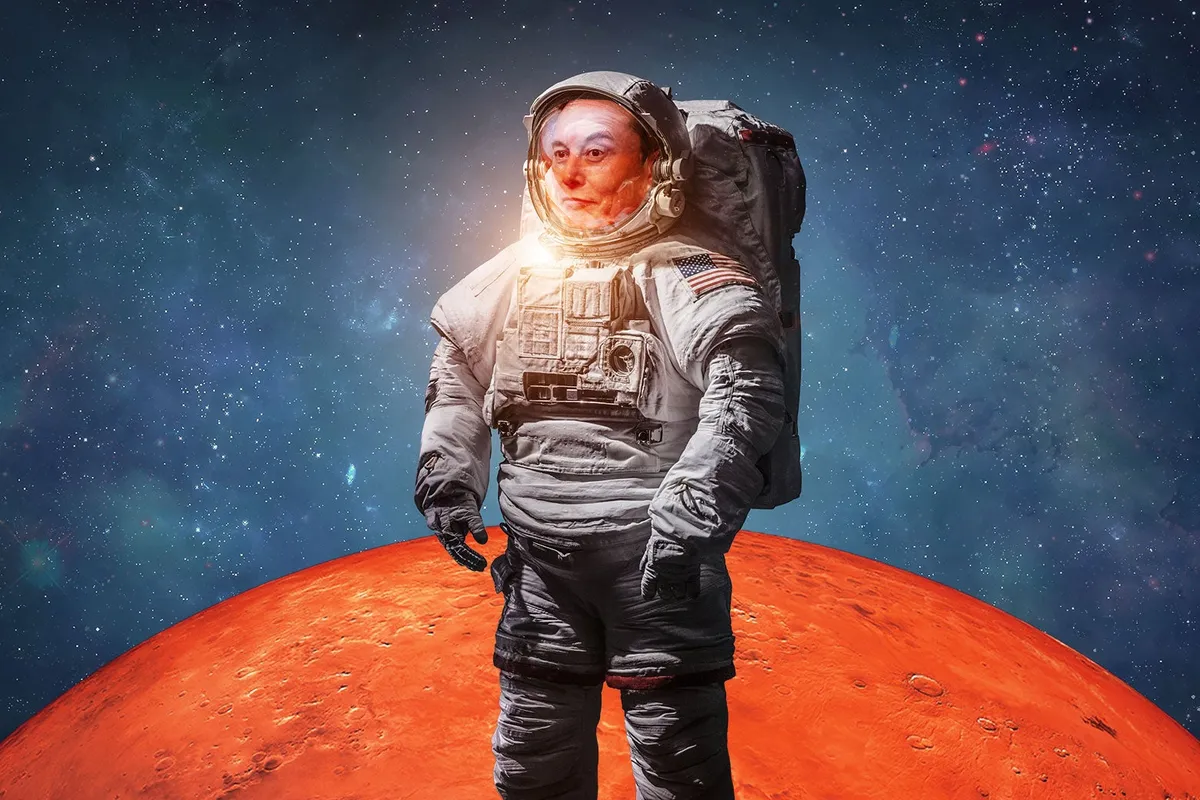
The allure of interstellar exploration, fueled by decades of science fiction and ambitious pronouncements from figures like Elon Musk, often overshadows the stark biological realities facing humans beyond Earth's protective atmosphere. While the dream of colonizing the Moon or journeying to Mars persists, recent scientific assessments and an understanding of physiological responses to microgravity and radiation paint a sobering picture. The fundamental challenge lies not in the engineering feats required to reach these distant locales, but in the profound and often detrimental impact prolonged exposure to the space environment has on the human body. This complex interplay of physical and psychological stressors demands critical examination before humanity can truly become a multi-planetary species.
The journey itself, let alone sustained habitation, presents a cascade of health adversities. From the immediate effects of fluid shifts and sensory disorientation to the insidious, long-term degradation of bone density, muscle mass, and organ function, the human body seems fundamentally ill-suited for the rigors of space. These challenges are compounded by the ever-present threat of cosmic radiation, which lacks the shielding provided by Earth's magnetosphere and atmosphere. As we consider the feasibility of longer missions, such as the multi-year voyages to Mars, it becomes clear that current medical and technological countermeasures are, at best, partial solutions, raising serious questions about the long-term viability and safety of human deep-space endeavors.
The Health Toll of Extended Space Missions
The physical toll of space travel begins with immediate physiological adaptations. Upon entering microgravity, astronauts experience a redistribution of bodily fluids, leading to symptoms like nasal congestion and a feeling of fullness, often referred to as 'space sniffles'. While seemingly minor, this fluid shift can affect various bodily systems. More concerning, however, are the long-term consequences observed in crucial organs. Kidneys, essential for filtering waste, rely on gravitational cues for optimal function. Extended periods in microgravity have been shown to impair kidney function, with some studies indicating that even a month in space could initiate irreversible changes to kidney pathways. This raises significant concerns for missions lasting years, where cumulative damage could become profound.
Beyond the kidneys, other vital systems also suffer. Research indicates that astronauts spending as little as six months aboard the International Space Station exhibit arterial stiffness and endocrine system damage comparable to a decade of aging on Earth. These findings suggest a accelerated aging process within the microgravity environment. While countermeasures like rigorous exercise regimens and pharmaceutical interventions are employed to mitigate some of these effects, their long-term efficacy for missions extending beyond current six-month durations remains uncertain. The body’s adaptation to Earth’s gravity is deeply ingrained, and its disruption poses a multifaceted threat to astronaut health.
Radiation Exposure: A Persistent Threat
One of the most significant and persistent dangers in space is radiation. Earth's atmosphere and magnetic field act as a powerful shield, protecting us from the constant bombardment of galactic cosmic rays and solar particle events. Outside this protective cocoon, astronauts are exposed to substantially higher levels of radiation. Even a routine commercial flight exposes individuals to radiation equivalent to one X-ray, a dose that is generally considered harmless. In contrast, astronauts on the International Space Station (ISS) receive approximately 240 to 480 X-ray equivalents during a six-month mission.
Projecting these figures to a three-year round trip to Mars, NASA estimated that astronauts could be exposed to radiation equivalent to 3,600 X-rays. This level of exposure dramatically increases the risk of developing cancer and other radiation-induced illnesses. While potential solutions, such as utilizing lunar caves for habitats to provide natural shielding, are being explored, the transit phase between Earth and Mars remains a critical vulnerability. Current shielding technologies, which often involve heavy materials like water, are prohibitively expensive and complex to implement for deep-space missions, leaving a significant gap in our ability to protect astronauts during interplanetary journeys.
Musculoskeletal Degradation and Long-Term Habitation Challenges
The human musculoskeletal system, finely tuned by millions of years of evolution under Earth's gravitational pull, faces severe challenges in microgravity. Astronauts experience a significant loss of bone density, with certain bones losing approximately 1 percent of their density each month spent in space. While daily exercise for several hours can partially counteract this bone loss, it does not fully prevent it. Studies combining intensive exercise with bisphosphonates, drugs known to slow bone loss, have shown some success in further reducing the rate of degradation, but the long-term impact on bone health and fracture risk remains a concern.
Muscle atrophy is another critical issue. Without the constant resistance provided by gravity, muscles begin to waste away, diminishing strength and endurance. Again, exercise is the primary countermeasure, but it serves mainly to maintain fitness during a mission rather than reversing or permanently preventing muscle loss. Crucially, the available solutions are largely focused on keeping astronauts functional for the duration of relatively short missions, typically around six months. The question of how to maintain human health indefinitely in lunar or Martian settlements, where astronauts would remain for years or even decades, remains largely unanswered, with current interventions falling short of providing long-term sustainability.
Unknown Dangers and a Realistic Outlook
The challenges discussed thus far—radiation, bone and muscle loss, kidney function, and cardiovascular changes—are those that current research and preliminary missions have identified. However, the full spectrum of health risks associated with prolonged deep-space exposure is likely still unknown. Our understanding is based on a limited number of astronauts, primarily those who have spent relatively short durations in low Earth orbit. The physiological effects of spending one to two years or more in space, subjected to different radiation environments and levels of microgravity, are largely speculative.
Given these profound biological hurdles, a realistic assessment suggests that long-term human habitation on the Moon or Mars, or even extended multi-year missions, may not be feasible within the current scientific and medical paradigms. While humanity's drive to explore is undeniable, the fundamental incompatibility of the human body with the harsh realities of space demands rigorous scientific inquiry and the development of truly transformative medical and technological solutions before such ambitious goals can be safely realized. For the foreseeable future, the dream of widespread human presence beyond Earth may remain more in the realm of science fiction than immediate reality.