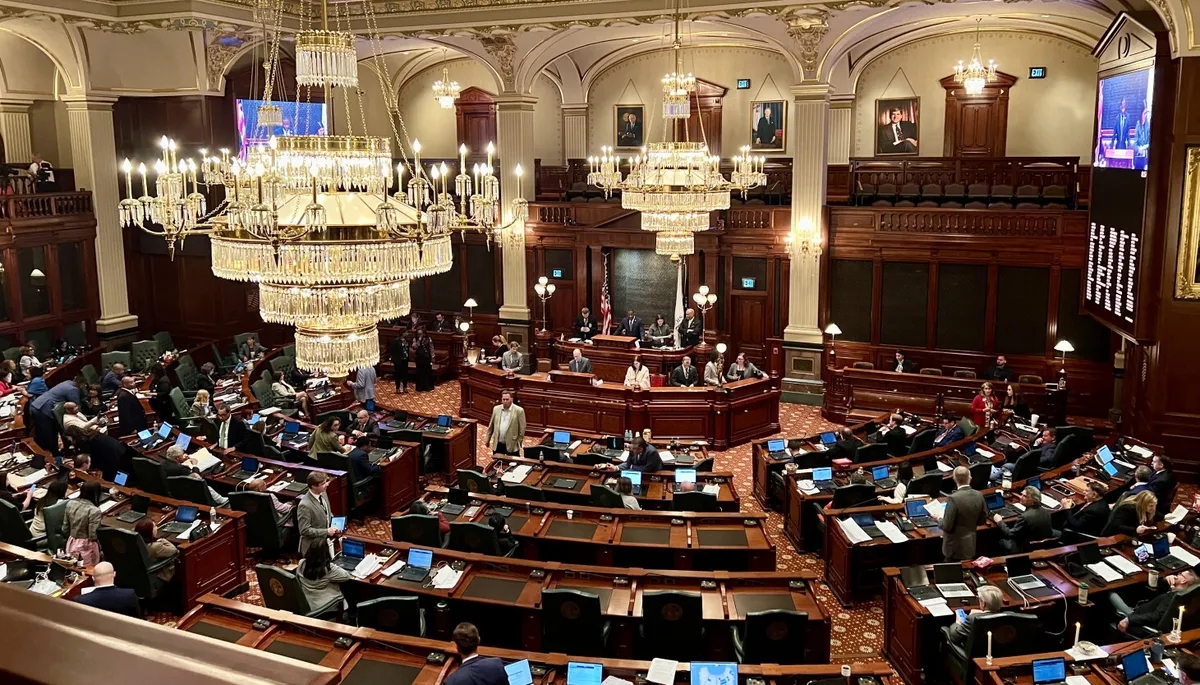
Illinois lawmakers have finalized a state budget totaling approximately $56 billion, navigating fiscal pressures by introducing new revenue streams. The budget, passed late Sunday, includes measures to increase funding for food assistance programs, addressing federal cuts without imposing new burdens on "everyday working families." Key to bolstering state coffers are anticipated taxes on emerging digital industries, specifically prediction markets, cryptocurrency, and fantasy sports. Additionally, the plan targets digital advertising revenue and proposes a tax on social media companies, mirroring a controversial levy already facing legal challenges in Chicago.
While budget leaders are proceeding with caution, not fully relying on the projected $200 million from these new taxes due to potential legal hurdles, they are confident in securing a portion of this revenue. This fiscal strategy aims to balance the state's financial needs against the backdrop of economic uncertainty and federal funding shifts. The budget also involves redirecting sales tax revenue from sugary beverages from capital projects to the general fund, a move championed by proponents as a surgical approach to essential investments. However, the proposal has drawn criticism from progressive Democrats who argue it falls short of adequately funding education, healthcare, and public services, while Republicans decry the overall budget increase and the introduction of new taxes.
Illinois State Budget Overview
Revenue Generation Through New Taxes
The Illinois budget for the upcoming fiscal year is set to include several new tax initiatives aimed at generating revenue from burgeoning digital sectors. Lawmakers are targeting prediction markets, cryptocurrency, and fantasy sports with new taxation measures. The intention is to capture revenue from these rapidly growing industries, which have seen significant expansion in recent years. Alongside these, a tax on digital advertising revenue is also part of the fiscal plan, further diversifying the state's income sources.
A significant component of the new revenue strategy involves a tax on social media companies, similar to one implemented in Chicago that has faced legal opposition. While the full revenue potential of these new taxes is uncertain and subject to legal challenges, the state is banking on a portion of the estimated $200 million to be collected. This approach reflects a broader trend in state-level taxation attempting to keep pace with the evolving digital economy and its associated financial activities.
Support for Food Assistance and Social Programs
A primary focus of the new budget is the expansion of support for essential social programs, particularly food assistance. Recognizing the impact of federal funding cuts on programs like SNAP (Supplemental Nutrition Assistance Program), the state has allocated an additional $70 million to create a new program called Families Receiving Emergency Support for Hunger (FRESH). This initiative is designed to provide a one-time $400 payment to families who have recently lost SNAP benefits due to new federal work requirements.
Senator Elgie Sims, a key budget negotiator, emphasized that the budget aims to ease the lives of working families, stating, "There are no tax increases on everyday working families. In fact, everyday working families, as a result of this budget, will see their lives get easier." The budget also includes provisions to maintain a $143 million healthcare program for undocumented immigrants and allocates $4 million for immigrant welcoming service centers, underscoring a commitment to supporting vulnerable populations.
Fiscal Management and Republican Opposition
The budget reflects a delicate balance between increasing state spending and managing fiscal responsibilities, with a total nearing $56 billion. Senator Sims highlighted that the budget was constructed to address the most pressing needs, particularly in areas where federal support has receded. This includes increased funding for essential services and a suspension of a scheduled 1.3-cent-per-gallon increase in the state gas tax. Furthermore, a sales tax holiday for school supplies is planned to provide relief to households.
Despite these efforts, the budget faces opposition from Republicans who were largely excluded from negotiations. Senator Chapin Rose criticized the budget's overall increase from the previous year's $55.2 billion and expressed concern over the new taxes, stating, "They’re loading up their grocery cart literally before they have any idea how much they’re going to spend." Republicans also took issue with the surplus in motor fuel sales tax revenue, arguing it resulted from price gouging rather than fiscal prudence. The budget also includes provisions for a 3% cost-of-living raise for state legislators, which has also been met with criticism.
Property Tax Relief and Local Government Funding
In addition to the broader state budget, lawmakers addressed property tax concerns for homeowners and considered legislation aimed at enticing the Chicago Bears to build a new stadium in Illinois. A property tax relief program, absent from the previous year's budget, is being re-funded. This program aims to alleviate the burden of property taxes, which are primarily levied by local school boards and taxing bodies. The state will offer additional funding to school districts to help manage local property tax rates.
A notable victory for Chicago Mayor Brandon Johnson is the restoration of local governments' cut of state income tax to 6.47%, a reversal of Governor Pritzker's proposed reduction to 6.23%. This adjustment is expected to benefit municipalities by an estimated $60 million annually, including significant support for Chicago itself. The governor's initial proposal had drawn protests from mayors concerned about the impact on local services.
Legislative Wins and Education Policy
The legislative session saw several key bills passed, including significant measures related to education and public health. Governor Pritzker secured a long-awaited legislative win with the passage of a statewide ban on cell phones in schools. This initiative, previously proposed in early 2025, finally gained bipartisan support and awaits the governor's signature. The ban aims to reduce screen time and social media disruption in educational environments, aligning Illinois with several other states that have implemented similar policies.
The passage of the cell phone ban highlights a focus on improving the learning environment for students. The bipartisan support for the measure underscores a shared concern among parents, educators, and policymakers regarding the impact of technology on student well-being and academic performance. The governor's office stated that the ban reflects the urgency felt by educators and families across the state to address these challenges.
Impact Analysis
The approval of Illinois' new $56 billion budget signifies a complex fiscal maneuver, balancing increased spending on social programs with innovative, albeit potentially contentious, revenue generation strategies. The inclusion of taxes on cryptocurrency, prediction markets, and fantasy sports indicates a forward-looking approach to taxing emerging digital economies, yet the reliance on these new streams, especially given potential legal challenges, introduces an element of fiscal risk. The FRESH program represents a critical intervention to mitigate the impact of federal SNAP cuts, highlighting the state's role in providing a safety net. However, the fiscal consolidation efforts and the criticism from both progressive and Republican factions suggest ongoing political and economic tensions. The successful passage of the cell phone ban in schools presents a significant policy shift, aligning with national trends aimed at improving student focus and well-being, but its long-term efficacy and enforcement will be closely watched.