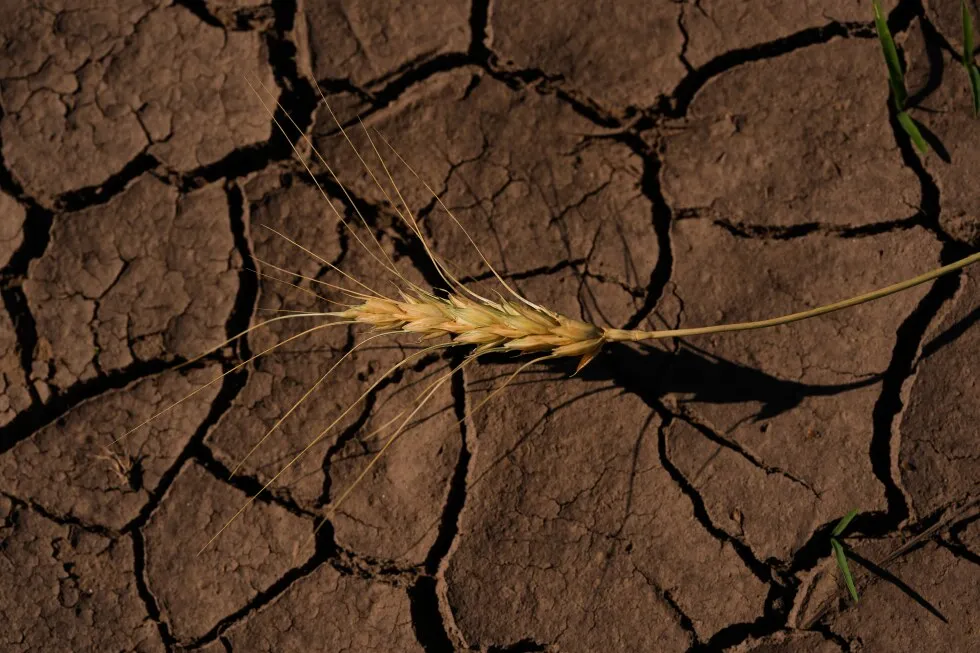
Farmers in western Kansas are facing one of the most challenging years on record, grappling with a severe drought, escalating operational costs, and the lingering effects of geopolitical instability. Orville Williams, a 76-year-old farmer with decades of experience, describes the current season as particularly difficult, anticipating yields significantly lower than in previous years. His irrigated fields, which usually produce around 100 bushels per acre, may only yield 30 to 40 this season. For his dryland crops, reliant on rainfall, yields could drop to as low as 10 to 15 bushels per acre, a stark contrast to past productivity.
The confluence of adverse weather conditions and economic pressures paints a grim picture for the region's wheat crop, a staple for Kansas agriculture. The U.S. Department of Agriculture projects the smallest wheat crop since 1972, with production down 21% from the previous year. This decline disproportionately affects Kansas, a major wheat-producing state, threatening not only the livelihoods of its farmers but also impacting global wheat markets and consumer prices for essential goods like bread.
Impact of Weather Extremes on Crop Yields
Record-setting drought and hotter-than-average temperatures have plagued much of the U.S., with the Plains region experiencing particularly harsh conditions. These environmental stressors have exacerbated the spread of crop diseases, such as the wheat streak mosaic virus and barley yellow dwarf virus, further diminishing yield potential. According to USDA data, 58% of Kansas's wheat crop was rated as “poor” or “very poor” as of mid-May, a condition not seen to this extent in years.
Romulo Lollato, a Kansas State agronomist, highlighted that these severe weather patterns can lead to premature crop development, resulting in lower quality harvests. The agricultural sector is intrinsically tied to climatic conditions, and the increasing frequency and intensity of such events pose a significant threat to food security and farm profitability.
Rising Input Costs Compound Farmer Challenges
Beyond the direct impact of weather, farmers are contending with a sharp increase in essential input costs. The cost of diesel fuel, critical for farm machinery, has seen a significant rise, directly affecting farmers like Orville Williams who manage extensive acreage and extensive daily travel. Similarly, the price of fertilizers, such as urea, has climbed substantially, with costs per ton increasing by as much as 50% to 75% compared to the previous year.
These rising expenses, coupled with the residual effects of past trade policies, create a precarious financial situation. While government support programs and crop insurance offer some mitigation, they often fall short of covering the full extent of the losses, leaving many farmers questioning the sustainability of their operations for future seasons.
Market Dynamics and Global Wheat Trade
The diminished U.S. wheat harvest occurs against a backdrop of shifting global market dynamics. The United States has seen its competitive edge in the international wheat market erode, with countries like Russia and the European Union capturing larger shares. This trend is partly attributed to the declining wheat acreage planted in the U.S. over recent years, a consequence of various economic and environmental factors.
Wheat remains a vital commodity in global food trade, and a reduction in U.S. production can have ripple effects on international prices and supply chains. Farmers' inability to meet demand due to crop failures directly impacts their role as major global suppliers.
Limited Options for Farmers Facing Losses
With crops failing and costs escalating, farmers have few viable options to recoup their losses. Crop insurance provides a safety net, but it is not a complete solution. Government assistance, such as the one-time bridge payments offered to some farmers, is also limited in scope and duration.
The concept of fallowing land—leaving it uncultivated to preserve soil moisture for future planting—is not practical when the immediate need is to salvage any potential from the current season. Similarly, switching to alternative crops mid-season is largely unfeasible due to the lack of adequate soil moisture and the established planting timelines for different agricultural products.
Future Outlook for Wheat Farming in the Plains
The outlook for wheat farmers in the coming year remains uncertain, with forecasters predicting a substantial El Niño event that could influence weather patterns, potentially prolonging the dry conditions. This adds another layer of complexity to an already challenging agricultural landscape, forcing farmers to make difficult decisions about their operations and the future of their generational farms.
Farmers like Mike Nickelson express deep concern about transitioning their family farms to the next generation, questioning whether the current climate and economic realities make farming a sustainable path for their children. The resilience and dedication of these farmers are being severely tested by a combination of factors largely beyond their direct control, highlighting the vulnerability of the agricultural sector to climate change and global economic shifts.
Impact Analysis
The significant decline in the U.S. wheat crop, driven by severe drought and rising operational costs, has far-reaching implications. Consumers can expect higher prices for wheat-based products, such as bread and pasta, as domestic supply dwindles and global demand remains robust. This situation also impacts the U.S.'s position in the global grain export market, potentially ceding market share to competitors. For the farmers themselves, the economic strain could lead to a reduction in agricultural land cultivation and potentially force some out of business, impacting rural economies and the continuity of family farming traditions. The reliance on weather patterns and global commodity prices underscores the inherent risks in agriculture, further exacerbated by the intensifying effects of climate change.