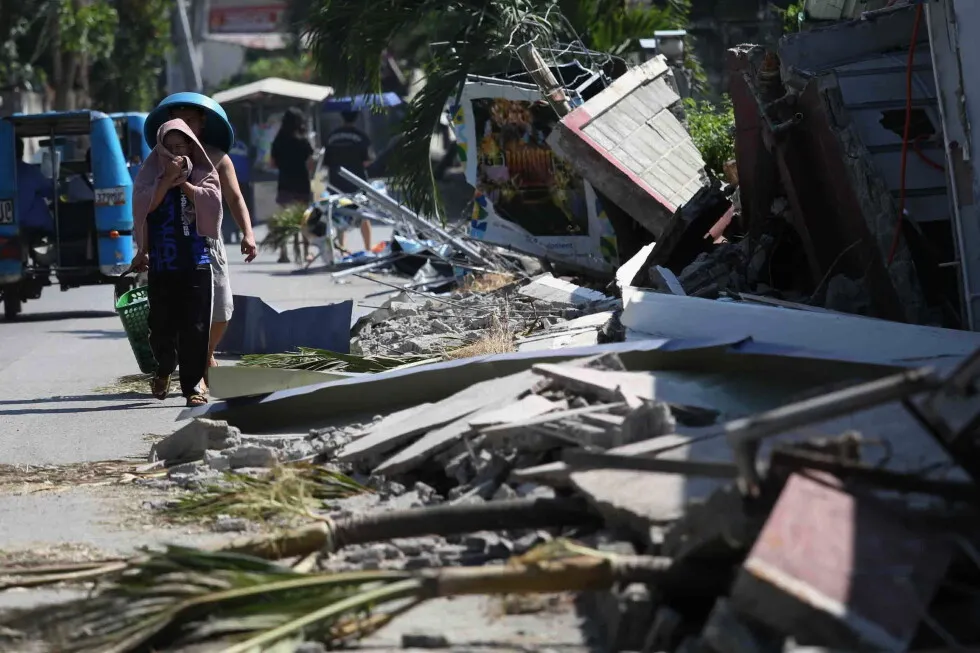
The mayor of Glan, a town severely impacted by a recent 7.8 magnitude earthquake in the Philippines, has urgently requested aerial assistance to deliver essential food supplies to remote villages. The earthquake, one of the most powerful to strike the nation in decades, has caused widespread devastation, leading to significant displacement and isolation of communities due to landslides. Mayor Victor James Yap highlighted the critical need for helicopters as road access to ten of the town's thirty-one villages remains completely cut off following the seismic event. This plea underscores the immediate humanitarian crisis unfolding in the affected regions, where residents are facing severe hunger.
The earthquake, which struck off the coast of Sarangani province on Monday, has resulted in a tragic death toll of at least 47 people, with hundreds injured and dozens still missing. Over 45,000 individuals have been displaced, with a substantial portion seeking refuge in temporary shelters. The damage extends to over 12,600 homes, impacting numerous agricultural towns and cities. The lingering threat of aftershocks continues to leave residents traumatized, hindering their return to damaged homes. In Glan, the situation is particularly dire, with the town still without power and experiencing unreliable cellphone services, exacerbating the challenges of coordinating relief efforts.
Earthquake Impact and Relief Efforts
Sarangani province, the epicenter of the destruction, has reported the highest number of fatalities, with Glan alone accounting for a significant portion of the casualties. Many homes in Glan were lost due to a massive landslide triggered by the earthquake, further complicating rescue and aid operations. Mayor Yap emphasized that while efforts are underway to clear a key access road, the immediate priority is to reach isolated communities through air transport. The government has acknowledged the severity of the situation, deploying numerous military and civilian assets, including planes, helicopters, ships, and trucks, to facilitate aid delivery and rescue operations. Despite these efforts, the scale of the disaster necessitates a rapid and robust aerial response to prevent further suffering.
Urgent Need for Aerial Supply Lines
The operational challenges in Glan are substantial. With ten villages still inaccessible by land, the reliance on air support is paramount for survival. Mayor Yap's appeal highlights the immediate logistical hurdles in reaching those cut off by landslides. The lack of power and intermittent communication services further compound the difficulties faced by local authorities in assessing needs and distributing aid effectively. The estimated value of relief goods provided so far, including food packs and financial assistance, amounts to over 26 million pesos ($426,000). However, these supplies struggle to reach the most affected areas without aerial intervention. The deployment of air force helicopters is critical to ensuring that food and other essential supplies reach the hungry populations before the situation deteriorates further.
 Approximately 3,400 personnel from government and military agencies are actively engaged in search and rescue missions, clearing debris from vital roadways, and conducting damage assessments. These critical operations are vital for the recovery process, but the immediate humanitarian need in isolated villages remains the most pressing concern. The Philippine government has allocated significant resources to disaster response, yet the unique geographical challenges presented by the landslides require specialized logistical solutions like helicopter support.
Presidential Response and Recovery Efforts
President Ferdinand Marcos Jr. made a visit to General Santos city, a heavily affected area, to personally assess the damage to critical infrastructure such as hospitals and schools. During his visit, the President ordered the release of 100 million pesos ($1.6 million) for the reconstruction of the partially collapsed city hall. Additionally, financial aid of 50,000 pesos ($820) has been designated for the families of each victim who tragically lost their lives in the earthquake. This comprehensive approach aims to address both immediate relief needs and long-term recovery strategies for the affected communities.
The seismic activity has had a devastating impact across the region, with collapsed buildings and landslides causing the majority of fatalities. The coastal city of General Santos, along with the provinces of South Cotabato and Davao Occidental, have reported significant loss of life. In a tragic turn of events, two swimmers drowned off the coast of General Santos, with one still missing, after being swept out to sea by waves generated by the powerful quake. These waves also impacted coastal areas in Indonesia, Palau, and even reached southern Japan, indicating the immense scale of the seismic event.
Historical Context and Geological Vulnerability
This earthquake ranks among the most severe to hit the Philippines, drawing parallels to the devastating 1976 event which caused approximately 8,000 fatalities due to a combination of seismic activity and a subsequent tsunami. The Philippines' geographical location along the Pacific Ring of Fire, an area notorious for frequent earthquakes and volcanic activity, makes it highly susceptible to such natural disasters. This vulnerability necessitates continuous preparedness and robust disaster management strategies.
The ongoing efforts to rebuild and provide relief are crucial for the affected communities. The swift response, including the allocation of funds and deployment of resources, demonstrates a commitment to recovery. However, the immediate need for food in isolated areas underscores the critical importance of efficient logistical support, particularly aerial aid delivery, to mitigate the ongoing humanitarian crisis.
Impact Analysis
The recent earthquake in the Philippines highlights the critical need for enhanced disaster preparedness, particularly in regions prone to landslides and limited by challenging terrain. The reliance on aerial support for critical supply chains in isolated areas suggests a need for pre-positioned resources and rapid deployment protocols for helicopters and other aircraft during emergencies. Furthermore, the economic impact, evidenced by the damage to infrastructure like the city hall, requires substantial financial commitment for reconstruction, as seen in the presidential directive. This event also emphasizes the importance of early warning systems for secondary hazards like landslides and tsunamis, even if minor in this instance, to ensure comprehensive public safety in seismically active zones.