The narrative of empires rising and inevitably falling is a pervasive historical theme, with the Roman Empire frequently cited as a prime example. For centuries, Rome stood as a colossal power, yet its eventual dissolution, particularly in the West, is often attributed to a confluence of insurmountable forces. However, a closer examination reveals a more nuanced reality. While the Western Roman Empire faced profound systemic challenges that made its demise highly probable, the enduring survival of its Eastern counterpart and historical precedents for successful reforms suggest that these crises might not have been entirely inescapable. This analysis delves into the multifaceted factors that contributed to the Western Roman Empire's collapse, exploring territorial overreach, economic instability, and political fragmentation.
The sheer scale of the Roman Empire, stretching from Britain to Mesopotamia at its zenith, presented immense logistical and military burdens. Defending such vast territories demanded colossal resources, a strain that became increasingly unsustainable over time. This immense defensive perimeter rendered the empire vulnerable to external pressures, commonly referred to as barbarian invasions. Compounding these issues were the slow communication lines inherent in such a large dominion, hindering the central government's ability to perceive and respond effectively to localized challenges. The administrative division into Eastern and Western Empires in 395 CE, intended to streamline governance and defense, ultimately highlighted the Western Empire's growing isolation and resource deficiencies.
Territorial Overreach and Its Consequences
The vast territorial expanse of the Roman Empire, particularly at its peak in 117 CE under Emperor Trajan, was both a testament to its power and a significant source of its eventual weakness. Maintaining control over such an extensive domain required a substantial military presence across multiple continents, leading to astronomical and often unsustainable defense expenditures. The constant need to secure distant frontiers diverted resources and attention from internal consolidation and economic development.
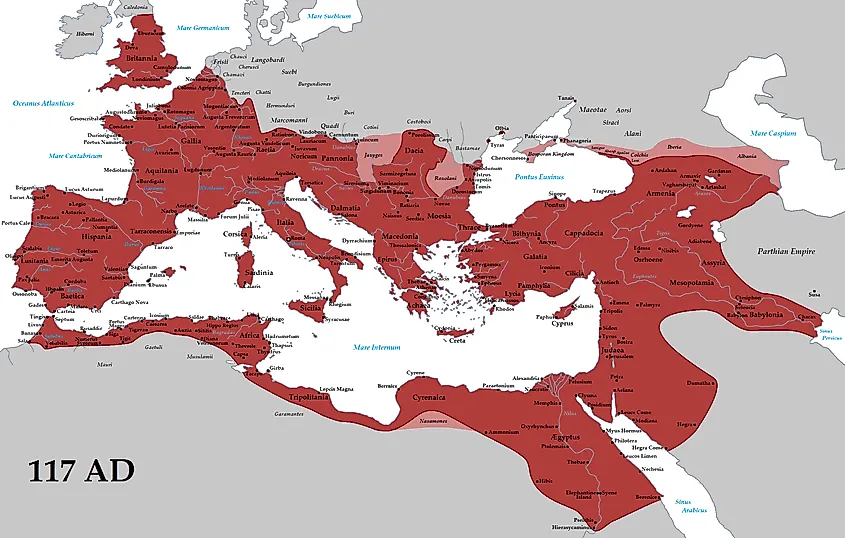
Furthermore, the sheer size of the empire complicated administration and communication. Information traveled slowly, making it difficult for the central authorities in Rome to grasp the specific needs and emerging threats within distant provinces. This delay in response could exacerbate local grievances and allow external pressures to fester. The eventual administrative split into the Western and Eastern Roman Empires in 395 CE was a direct response to these challenges, aiming for more focused governance. However, for the Western Empire, this division meant reduced access to the East's greater economic and military resources, ultimately contributing to its more rapid decline and fall in 476 CE.
Systemic Economic Problems Fueling Decline
The Roman economy, once a bedrock of its power, was progressively undermined by a series of systemic issues. Political instability, frequently erupting into civil wars, severely depleted the state's treasury. These internal conflicts not only diverted funds but also disrupted trade routes and agricultural production, further impacting revenue streams. The pressure to fund these wars and maintain the vast empire led to increased taxation in regions that could still be effectively governed.
This heavy tax burden, coupled with the insecurity of trade routes due to invasions and the pervasive issue of severe inflation, created an economic environment that was increasingly catastrophic. In an attempt to escape these crushing financial obligations, many citizens abandoned their lands, leading to a decline in productivity and further reducing the tax base. The economic woes of the 3rd, 4th, and 5th centuries CE thus created a vicious cycle that weakened the empire's ability to fund its defense and administration.
The Pervasive Issue of Political Instability
Political instability was a critical factor that exacerbated the empire's economic and military vulnerabilities. The absence of a clear, hereditary succession system for emperors often led to fierce power struggles and recurrent civil wars. This internal strife weakened the central authority and made the empire susceptible to external threats.

The Crisis of the Third Century (235-284 CE) serves as a stark illustration of this chronic instability, witnessing the rapid succession of over twenty emperors following the assassination of Severus Alexander. This period of intense civil war not only paralyzed governance but also created opportunities for incursions by external forces and further damaged the already strained economy. Even after periods of relative stability, the authority of the emperor was often diminished, leading to an increase in the influence of regional powers and military commanders, many of whom were of barbarian origin.
The Enduring Eastern Roman Empire
While the factors above paint a grim picture of the Western Roman Empire's decline, the continued existence of the Eastern Roman Empire (later known as the Byzantine Empire) for another thousand years after the West's fall in 476 CE raises questions about the inevitability of Rome's collapse.

The Eastern Empire, with its capital at Constantinople, demonstrated a remarkable resilience, successfully navigating many of the challenges that plagued its Western counterpart. Its survival suggests that the systemic problems faced by the West were not universally insurmountable and that effective governance, strategic resource management, and perhaps a more defensible geographic position contributed to its longevity. The fall of the Eastern Empire in 1453 CE to the Ottoman Turks was a distinct event, separate from the fate of the Western Empire, indicating that the collapse of the West was not a predetermined outcome for the entire Roman civilization.
Historical Precedent for Reform
Rome's history is replete with examples of successful reforms that allowed it to overcome significant challenges and evolve its political structures. From its transition from monarchy to republic in 509 BCE, establishing a system of checks and balances, to its later transformation into an empire in 27 BCE, which ushered in the Pax Romana, Rome demonstrated an ability to adapt its governance to changing circumstances.
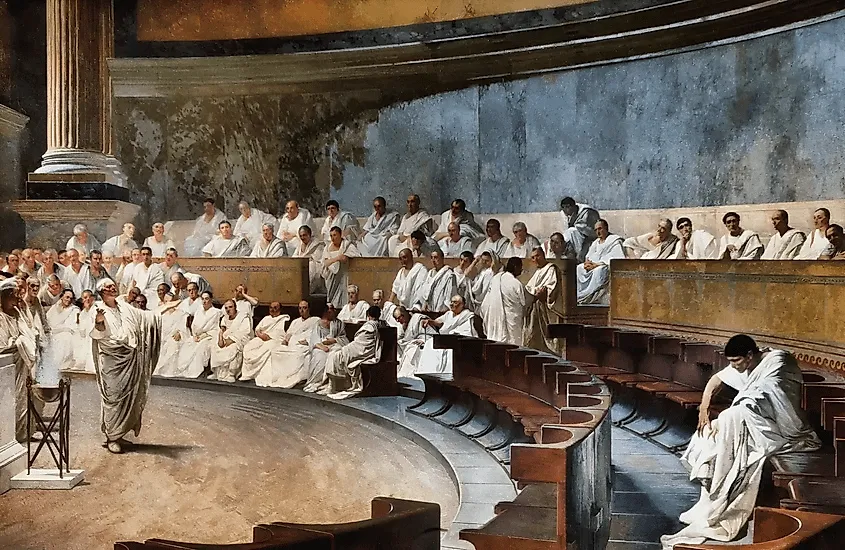
The Republic, initially designed for a city-state, eventually proved inadequate for managing a vast empire, prompting the shift to imperial rule under figures like Augustus. This imperial system, characterized by a strong central authority capable of decisive action, facilitated a long period of prosperity. The historical precedent of adapting political and administrative structures to meet existential threats suggests that the Western Roman Empire's fall was less a product of unresolvable issues and more a consequence of failing to implement the correct or timely solutions.
Impact Analysis
The collapse of the Western Roman Empire was a pivotal event that reshaped the geopolitical landscape of Europe, ushering in the Middle Ages. Its fall led to political fragmentation, economic disruption, and the loss of centralized infrastructure and administrative capacity across Western Europe. This fragmentation allowed for the rise of numerous successor kingdoms and laid the groundwork for the development of distinct European nations. The decline in trade, urban centers, and literacy had long-lasting effects on European society, culture, and economy. While the Eastern Roman Empire continued to preserve Roman traditions and governance for centuries, the fall of the West marked a distinct epochal shift, the consequences of which are still felt in the political and cultural divisions of the modern world.