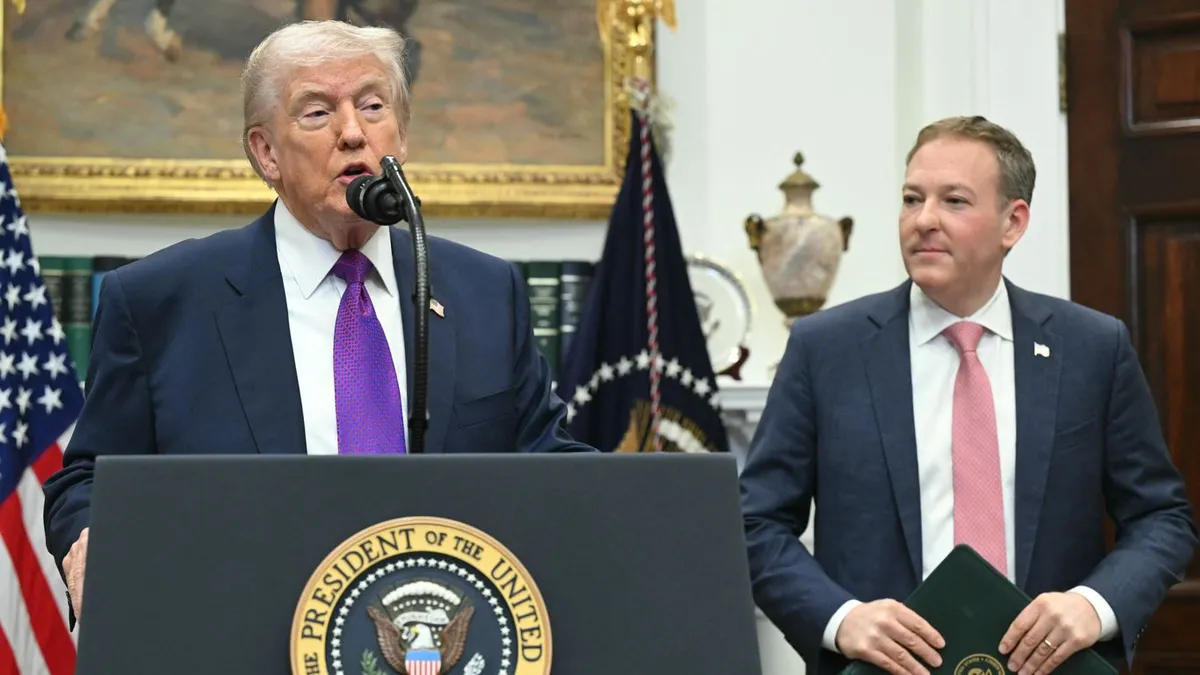
The Environmental Protection Agency (EPA) is set to significantly alter Biden-era regulations concerning the management and phasedown of hydrofluorocarbons (HFCs), potent greenhouse gases used extensively in refrigeration and air conditioning systems. A White House official confirmed that the proposed changes, scheduled for announcement by former President Trump, aim to alleviate economic pressures on industries and consumers. This regulatory shift prioritizes the reduction of operational costs, with the administration projecting substantial savings for households and businesses.
The core of this policy adjustment involves extending compliance deadlines for HFC phasedown mandates established in previous regulations. Proponents argue that these measures will directly translate into lower grocery prices by reducing the cost of transporting and storing perishable goods. Furthermore, the administration suggests that consumers could see more affordable home air conditioning units. This move comes at a time of heightened public concern over inflation and economic performance, positioning the regulatory changes as a direct response to these widespread economic anxieties.
Revising HFC Regulations and Their Rationale
EPA's Proposed Changes to HFC Rules
The EPA's proposed revisions specifically target regulations implemented in 2023 and 2024 concerning HFCs. The 2023 rule, which mandated a gradual reduction in HFC usage, will see its compliance deadlines extended. Additionally, a separate 2024 rule governing the management of HFC leaks and usage is also slated for modifications. A key aspect of these proposed changes is the potential exemption of the refrigerant transportation sector, which could further reduce logistical costs.
The justification for these adjustments, as articulated by EPA Administrator Lee Zeldin, is that previous Biden-era rules imposed "costly, unattainable restrictions beyond what the law requires." The administration asserts that the HFC phasedown, while important, has inadvertently led to supply constraints and rising refrigerant prices. By relaxing some of these immediate mandates, the EPA aims to stabilize and potentially lower the cost of these essential substances.
Economic Impact and Industry Response
The White House projects that these regulatory adjustments will yield over $2.4 billion in savings for families and businesses. The administration's narrative emphasizes that these savings will be passed on to consumers, contributing to lower overall costs for essential goods and services. This perspective frames the policy as a direct intervention to combat inflation and improve the economic well-being of the public.
However, the Air-Conditioning, Heating, and Refrigeration Institute (AHRI), a prominent trade association, has voiced concerns regarding the EPA's decision. The institute's president and CEO, Stephen Yurek, stated that extending compliance deadlines while supply continues to diminish, as mandated by the 2020 law, is likely to exacerbate price increases for refrigerants. This, in turn, could lead to higher service costs for HVAC systems and increased expenses for consumers, contradicting the administration's stated goals.
Background on HFCs and International Agreements
The regulation of HFCs is intrinsically linked to international efforts to protect the ozone layer and mitigate climate change. HFCs emerged as substitutes for ozone-depleting substances that were phased out under the Montreal Protocol. While effective in preserving the ozone layer, HFCs have been identified as potent greenhouse gases contributing to global warming.
The AIM Act, enacted in 2020 and signed into law by President Trump, mandated a phasedown of HFC production and consumption in the United States. This legislation aligns with the Kigali Amendment to the Montreal Protocol, which the U.S. ratified in 2022. The treaty aims to reduce HFCs by 80-85% by 2047. The current EPA action represents a divergence from the aggressive phasedown schedule previously pursued.
Impact Analysis
Environmental Considerations and Future Outlook
While the stated intention behind easing HFC regulations is to provide economic relief, environmental groups are likely to raise concerns about the potential impact on climate change mitigation efforts. HFCs, despite being less damaging to the ozone layer than their predecessors, possess a high global warming potential. A slower phasedown could mean a continued higher atmospheric concentration of these gases, potentially hindering progress towards climate goals.
The effectiveness of this policy in truly lowering consumer costs remains to be seen, especially given the counterarguments from industry bodies. Future developments will likely involve continued scrutiny from environmental organizations, potential legal challenges, and ongoing debate about the balance between economic priorities and climate action. The long-term implications for the refrigeration and air conditioning sectors, as well as broader climate targets, will depend on subsequent regulatory actions and market responses.