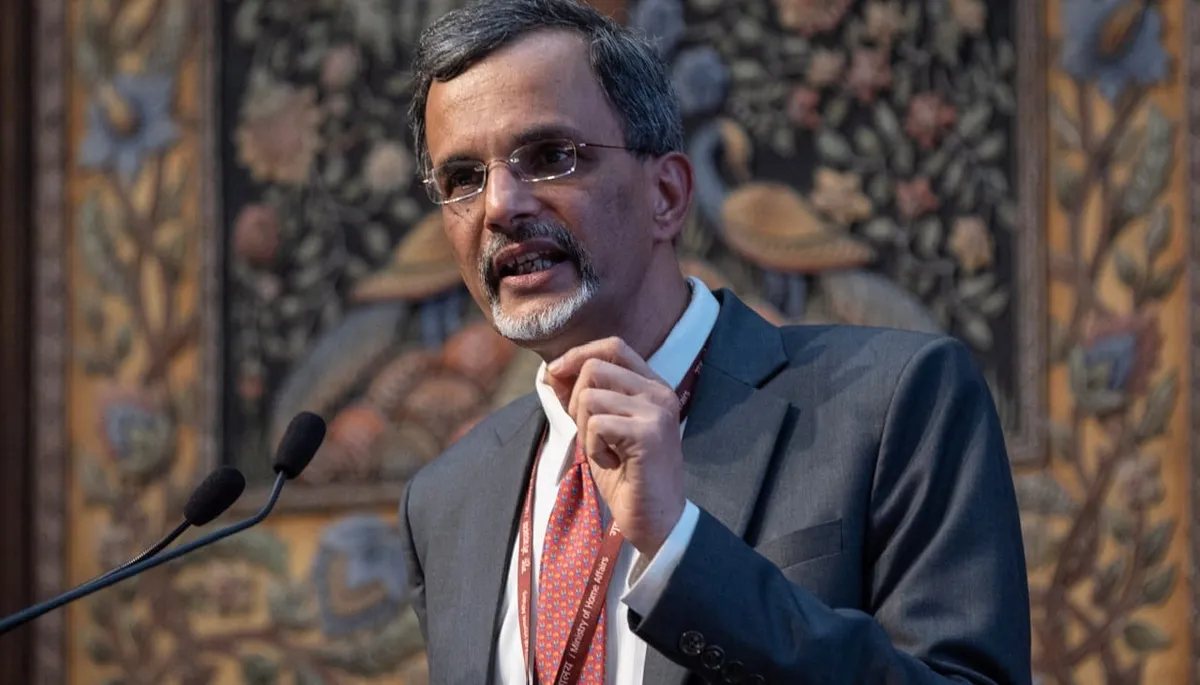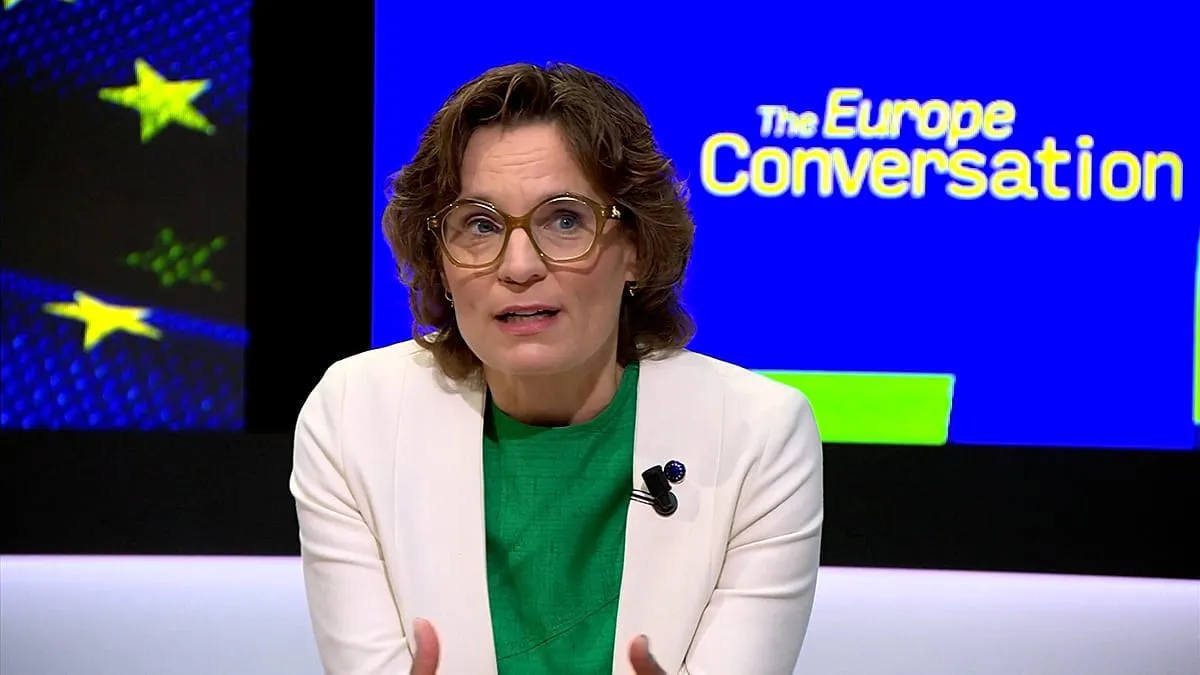
The European Union's approach to environmental policy must be integrated into its overarching defense strategy, according to European Environment Commissioner Jessika Roswall. In an interview with Euronews, Roswall emphasized the interconnectedness of environmental, economic, and security interests, asserting that Brussels needs to "connect the dots" to fully grasp these synergies. She highlighted that a significant portion of the environmental challenges facing the bloc, including the escalating impacts of climate change, represent an existential threat to Europe's stability and security.
Roswall elaborated on how environmental factors directly translate into security concerns. She stated, "There are a lot of examples. [Like] water, which is not only a resource. We need water for our daily lives; we need it for energy production; we need it for food production. And when water gets scarce, we are in trouble, and that eventually is also a security threat to us." Furthermore, she pointed out the global dimension, noting that "water is driving conflicts and so forth." Beyond direct threats, Roswall also discussed the strategic potential of natural resources. She cited the example of Poland, Finland, and Lithuania, which are exploring the restoration and re-flooding of peatlands along their eastern borders as a dual strategy for climate mitigation and national defense. The rationale is that such boggy terrain physically impedes the movement of heavy military equipment, effectively serving as a natural defensive barrier.
Environmental Degradation as a Security Threat
The commissioner's perspective is underscored by findings from a recent report by the UK's Department for Environment, Food and Rural Affairs (DEFRA), which reportedly involved insights from intelligence agencies MI5 and MI6. This report identified "natural degeneration" as the primary threat to the UK's national security, a sentiment that Roswall believes applies to many other nations. The report's authors cautioned that without substantial intervention, the escalating threats posed by biodiversity loss could precipitate geopolitical instability, economic insecurity, increased conflict, heightened migration pressures, and intensified competition for dwindling resources.
Roswall stressed the urgency of this issue, stating, "We need to understand that the risk of not investing in nature comes with an economic risk, but also with a security risk. And that's why I think we don't have a choice on whether to invest in our future; we need to do it." The report also highlighted the UK's vulnerability due to its reliance on global markets for essential supplies like food and fertilizers. This dependence was starkly illustrated by disruptions to agricultural supply chains stemming from conflicts involving Iran and the subsequent blockade of the Strait of Hormuz, a critical global trade route. Consequently, European farmers are experiencing substantial increases in fertilizer costs, a situation Roswall described as evidence that "dependency comes with a cost."
Strategic Autonomy Through Circular Economy
The European Union's own dependency on non-EU countries for energy and critical raw materials further amplifies the need for self-sufficiency. Roswall posited that the forthcoming Circular Economy Act, a legislative initiative she champions, will be pivotal in bolstering Brussels' strategic autonomy. She explained that the global demand for critical raw materials is intensifying, making the competition for these resources increasingly challenging. Therefore, enhancing self-sufficiency is paramount, and circular economy principles offer a viable pathway to achieve this by utilizing existing European materials more efficiently. "We are a goldmine [of raw materials], actually, but we don't use it," she remarked.
The proposed Circular Economy Act, slated for introduction in late 2026, aims to significantly boost the recovery and reuse of materials from waste streams, thereby reducing the reliance on virgin resources, particularly for sectors like new electrical and electronic equipment. A key objective is the establishment of a unified market for secondary raw materials – recycled materials derived from waste or end-of-life products. Roswall elaborated on the economic rationale, noting, "We need to make the business case for secondary materials, because virgin materials are cheaper today than secondary materials, but they are also scarce and being weaponised." She concluded by emphasizing the necessity for a broad societal shift, stating, "So we need to get rid of this dependency, and for this, consumers, policymakers and businesses need to have a change in mindset."