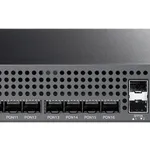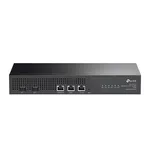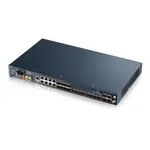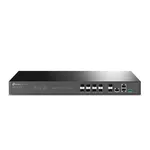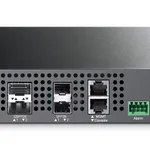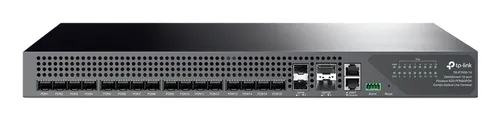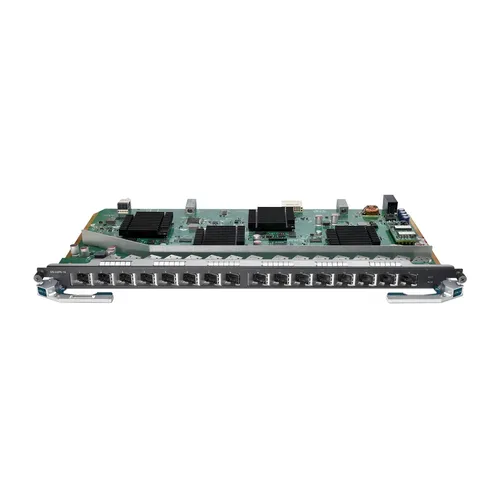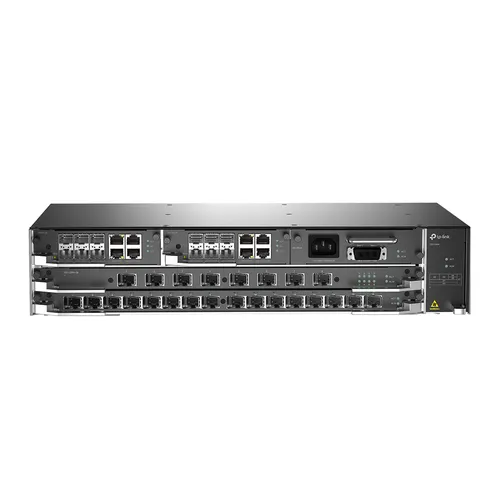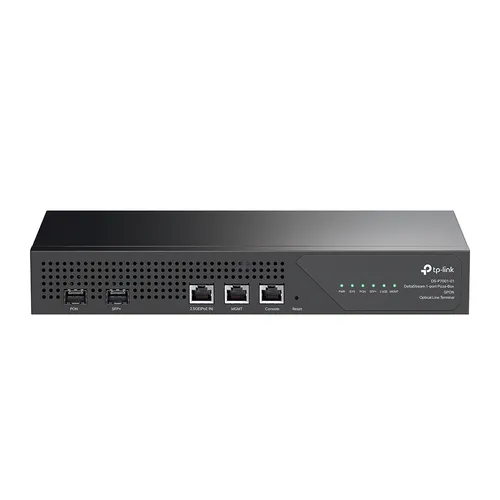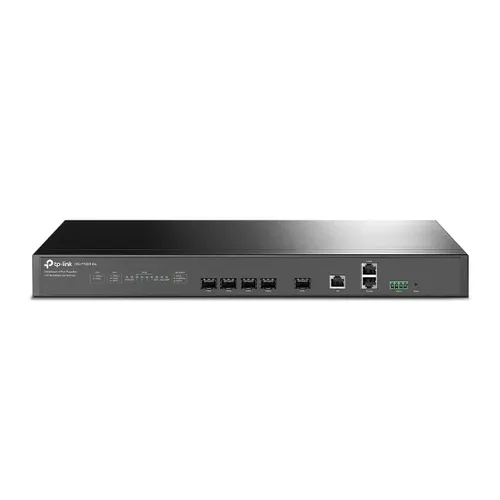


TP-Link DeltaStream 4-Port GPON OLT Pizza-Box
Specifications
Features
Features
| Static route |
Yes
75% have it
|
|---|---|
| DHCP server |
Yes
79% have it
|
| DHCP relay |
Yes
93% have it
|
| IGMP snooping |
Yes
60% have it
|
| Multicast Listener Discovery (MLD) snooping |
Y
|
| Quality of Service (QoS) support |
Yes
69% have it
|
| GPON split ratio (max) |
1:128
|
| Maximum operating distance (GPON) |
20000
m
75% better than others
|
| Access Control List (ACL) |
Yes
79% have it
|
Ports & interfaces
Ports & interfaces
| Upstream ports |
Gigabit Ethernet
|
|---|---|
| Ethernet LAN (RJ-45) ports |
2
|
| GPON ports quantity |
4
|
| SFP/SFP+ slots quantity |
1
|
Power
Power
| AC input voltage |
100 - 240 V
|
|---|---|
| AC input frequency |
50 - 60 Hz
|
| DC voltage range |
38.4 - 72 V
|
| Power consumption (max) |
58
W
50% better than others
|
Operational conditions
Operational conditions
| Operating temperature (T-T) |
0 - 50 °C
|
|---|---|
| Storage temperature (T-T) |
-40 - 70 °C
|
| Operating relative humidity (H-H) |
10 - 90%
|
| Storage relative humidity (H-H) |
5 - 90%
|
Weight & dimensions
Weight & dimensions
| Width |
440
mm
84% better than others
|
|---|---|
| Depth |
180
mm
37% better than others
|
| Height |
44
mm
53% better than others
|
Disclaimer: Information on this page may need review. If you notice any discrepancies, please report them

The TP-Link DeltaStream 4-Port GPON OLT is engineered for high-density access network deployments, offering a robust solution for service providers looking to expand their fiber-to-the-home (FTTH) infrastructure. Its compact, pizza-box form factor is designed for efficient rack space utilization, making it ideal for central offices or aggregation points where space is at a premium. The device supports the GPON standard, enabling high-speed, bi-directional data transmission over a single fiber strand, which is crucial for delivering advanced triple-play services including voice, video, and high-speed internet.
This OLT is characterized by its 4 GPON ports, each capable of supporting a significant number of ONUs (Optical Network Units), allowing for scalable subscriber management. The integrated management capabilities, typically accessed via CLI or a web-based GUI, provide network administrators with granular control over the network, including provisioning, monitoring, and troubleshooting. The choice of TP-Link for this segment indicates a push towards cost-effective yet reliable OLT solutions, aiming to lower the barrier to entry for smaller ISPs or to provide a competitive option for larger ones. Its performance metrics, such as throughput and latency, are critical for ensuring a high-quality user experience for end-subscribers, directly impacting the perceived value of the service provider's offerings.
Pros & Cons
Pros
What we love about this product
- High Port Density: Features 4 GPON ports in a compact pizza-box form factor, suitable for space-constrained environments.
- GPON Standard Compliance: Supports the Gigabit Passive Optical Network standard for high-speed fiber access.
- Scalable Subscriber Management: Designed to support a large number of ONUs per port, facilitating network expansion.
- Efficient Network Management: Offers comprehensive management features for provisioning, monitoring, and troubleshooting.
Cons
Points to consider before buying
- Limited Port Count: With only 4 GPON ports, it may not be suitable for very large-scale deployments requiring higher aggregation.
- Potential Vendor Lock-in: Reliance on TP-Link's ecosystem might be a consideration for some network designs.
- Basic Form Factor: The pizza-box design, while space-efficient, may lack advanced features found in larger modular OLT chassis.