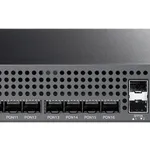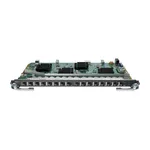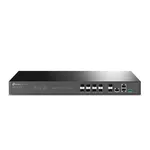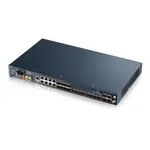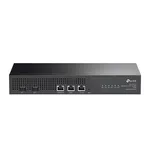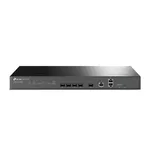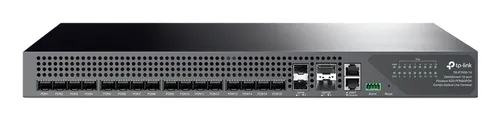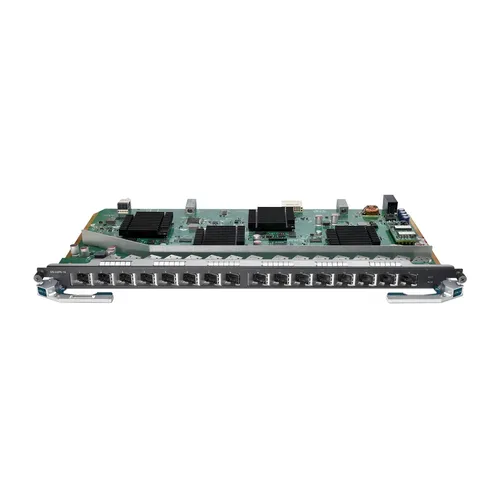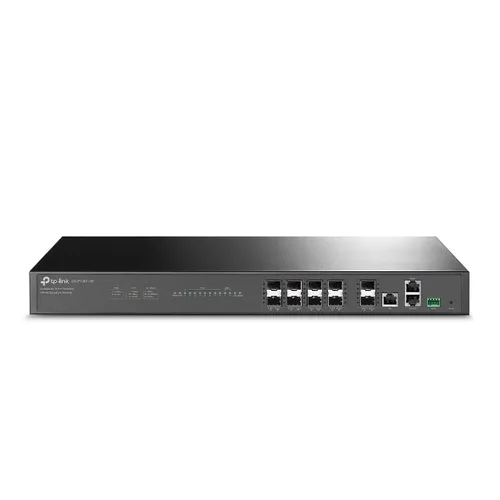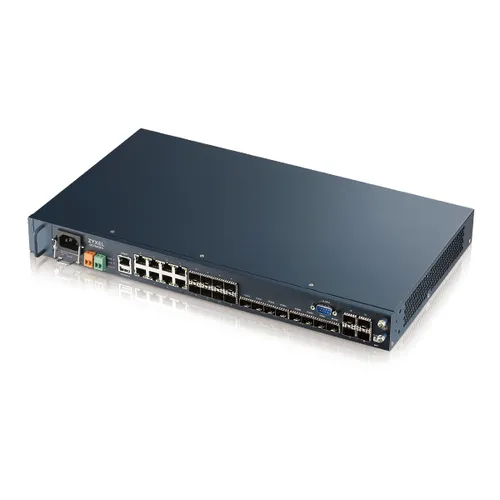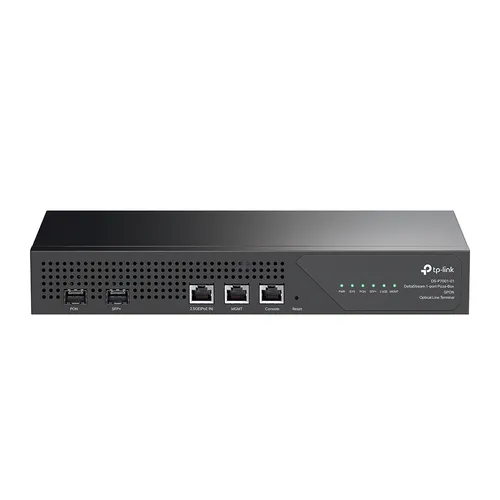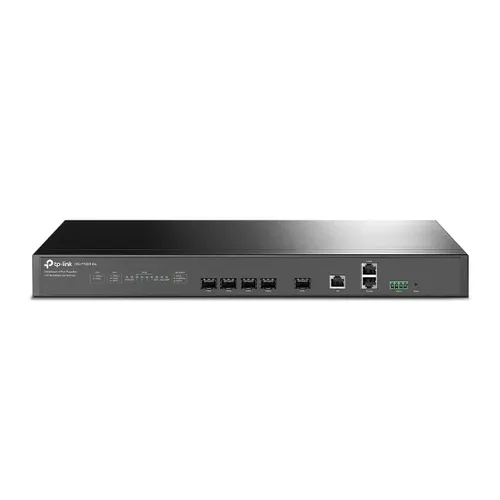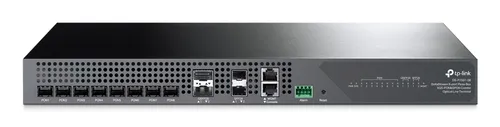


TP-Link DeltaStream DS-P7501-08 OLT
Specifications
Features
Features
| Switching capacity |
100 Gbit/s
|
|---|---|
| DHCP server |
Yes
89% have it
|
| DHCP relay |
Yes
92% have it
|
| GPON split ratio (max) |
1:128
|
| Maximum operating distance (GPON) |
20000
m
30% better than others
|
Ports & interfaces
Ports & interfaces
| Networking standards |
IEEE 802.1x
|
|---|---|
| Ethernet LAN (RJ-45) ports |
2
|
| GPON ports quantity |
8
|
| SFP/SFP+ slots quantity |
2
|
Power
Power
| AC input voltage |
100/240 V
|
|---|---|
| AC input frequency |
50/60 Hz
|
| DC voltage range |
72
V
72% better than others
|
| Power consumption (max) |
109.2
W
33% better than others
|
Operational conditions
Operational conditions
| Operating temperature (T-T) |
0 - 50 °C
|
|---|---|
| Storage temperature (T-T) |
-40 - 70 °C
|
| Operating relative humidity (H-H) |
10 - 90%
|
| Storage relative humidity (H-H) |
5 - 90%
|
Weight & dimensions
Weight & dimensions
| Width |
440
mm
82% better than others
|
|---|---|
| Depth |
330
mm
21% better than others
|
| Height |
44
mm
23% better than others
|
Disclaimer: Information on this page may need review. If you notice any discrepancies, please report them

The TP-Link DeltaStream DS-P7501-08 represents a compact and efficient Optical Line Terminal (OLT) solution designed for small to medium-sized fiber-to-the-home (FTTH) deployments. Its 8-port configuration offers a balanced approach to scalability, providing sufficient capacity for neighborhood-level or enterprise campus networking without the overhead of larger, more complex chassis-based systems. This unit is engineered to deliver reliable GPON connectivity, forming the crucial aggregation point between the optical network and subscriber devices.
Distinguishing itself with a focus on simplicity and cost-effectiveness, the DS-P7501-08 integrates essential OLT functionalities into a manageable form factor. While specific port speeds and uplink capacities are critical for a full performance assessment, the inherent design suggests suitability for scenarios demanding straightforward GPON termination and management. Its placement within TP-Link's broader networking portfolio indicates a commitment to providing end-to-end solutions for service providers, emphasizing ease of deployment and operation. The value proposition lies in its ability to bring robust GPON infrastructure to less dense service areas or specific building segments where a full-scale OLT might be economically unfeasible.
Pros & Cons
Pros
What we love about this product
- Compact Form Factor: Designed for space-constrained environments, suitable for smaller deployments.
- 8-Port GPON Capacity: Offers a balanced number of GPON ports for efficient aggregation in targeted network segments.
- TP-Link Ecosystem Integration: Potential for seamless integration with other TP-Link network management and subscriber-side equipment.
- Cost-Effective Solution: Likely to offer a competitive price point for its feature set, making GPON accessible for smaller projects.
Cons
Points to consider before buying
- Limited Port Density: The 8-port configuration may not be sufficient for large-scale FTTH rollouts requiring higher port counts.
- Specific Uplink Details Missing: Crucial specifications regarding uplink port type (e.g., SFP+, GE) and capacity are not detailed, impacting scalability assessment.
- Management Interface Specificity: While TP-Link generally offers user-friendly interfaces, the exact capabilities and depth of management features for this specific model require further investigation.