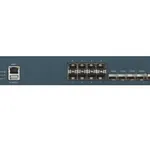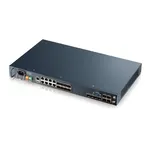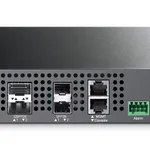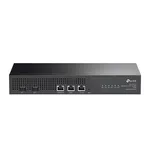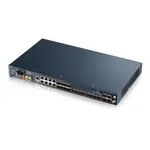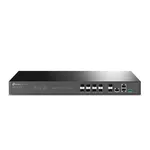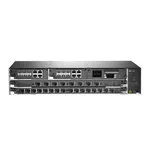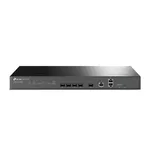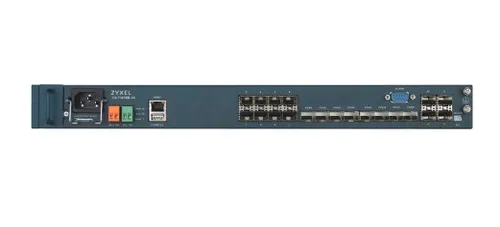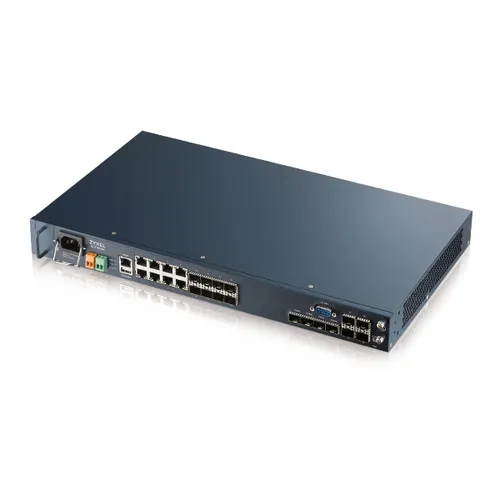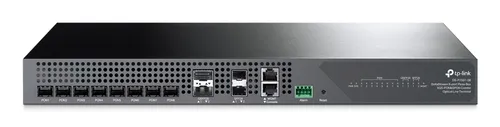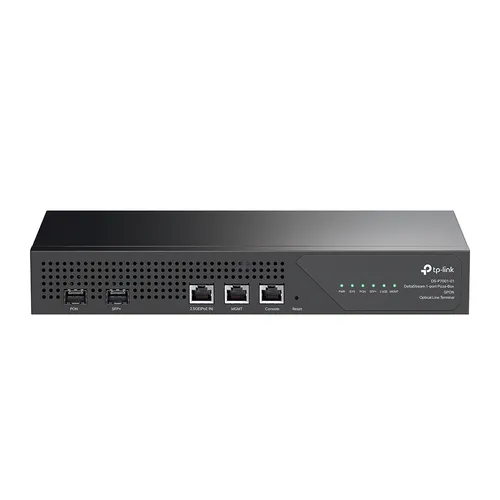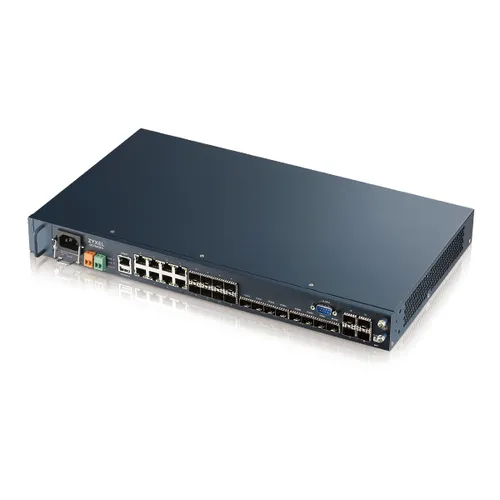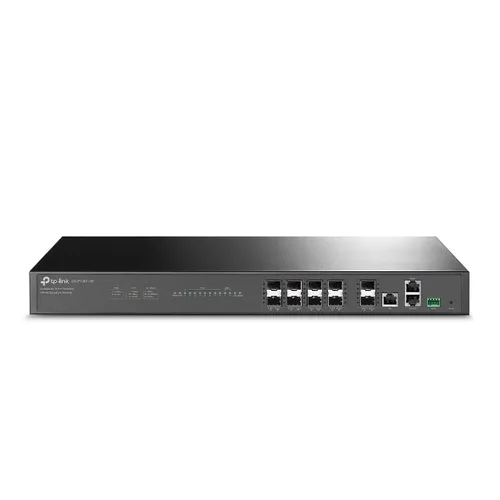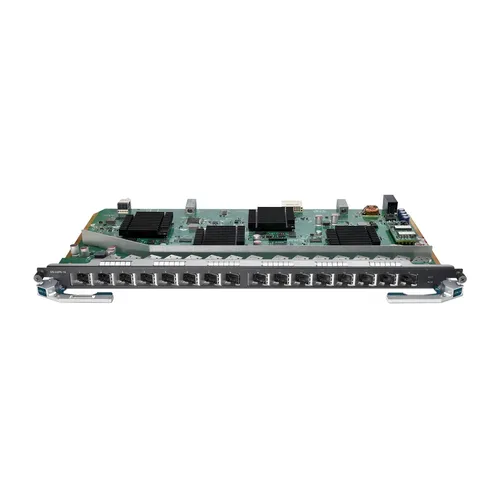


TP-Link DeltaStream DS-LGPA-16 OLT
Specifications
Features
Features
| Switch layer |
L2/L3
|
|---|---|
| Static route |
Yes
71% have it
|
| DHCP server |
Yes
93% have it
|
| DHCP relay |
Yes
80% have it
|
| IGMP snooping |
Yes
78% have it
|
| Multicast Listener Discovery (MLD) snooping |
Yes
80% have it
|
| Quality of Service (QoS) support |
Yes
94% have it
|
| Voice VLAN |
Yes
87% have it
|
| GPON split ratio (max) |
1:128
|
| Maximum operating distance (GPON) |
20000
m
41% better than others
|
| Access Control List (ACL) |
Yes
89% have it
|
Ports & interfaces
Ports & interfaces
| Networking standards |
IEEE 802.1p, IEEE 802.1x
|
|---|---|
| Ethernet LAN (RJ-45) ports |
16
64% better than others
|
| GPON ports quantity |
16
25% better than others
|
Power
Power
| DC voltage range |
-38.4 - -57.6 V
|
|---|---|
| Power consumption (max) |
56.2
W
37% better than others
|
Sustainability
Sustainability
| Sustainability compliance |
Yes
80% have it
|
|---|
Operational conditions
Operational conditions
| Operating temperature (T-T) |
0 - 50 °C
|
|---|---|
| Storage temperature (T-T) |
-40 - 70 °C
|
| Operating relative humidity (H-H) |
10 - 90%
|
| Storage relative humidity (H-H) |
5 - 90%
|
Certificates
Certificates
| Compliance certificates |
CE, Federal Communications Commission (FCC)
|
|---|
Weight & dimensions
Weight & dimensions
| Width |
390.8
mm
35% better than others
|
|---|---|
| Depth |
257.5
mm
28% better than others
|
| Height |
22.5
mm
67% better than others
|
Disclaimer: Information on this page may need review. If you notice any discrepancies, please report them

The TP-Link DeltaStream DS-LGPA-16 represents a significant offering in the Optical Line Terminal (OLT) market, designed to facilitate high-density fiber-to-the-home (FTTH) deployments. As a key component in passive optical network (PON) infrastructure, this OLT is engineered to manage and aggregate traffic from multiple Optical Network Units (ONUs) or Optical Network Terminals (ONTs) within a service provider's network. Its architecture prioritizes efficient bandwidth allocation and robust management capabilities, crucial for delivering reliable broadband services to end-users. The DS-LGPA-16 is positioned to support service providers looking to scale their fiber networks effectively, offering a blend of performance and manageability.
This OLT features a 16-port configuration, indicating its capacity for substantial user aggregation. While specific port types (e.g., GPON, EPON) and uplink capacities are not detailed in the provided context, the inherent design of an OLT implies support for standard PON technologies. The focus for such a device typically lies in its ability to provide high throughput, low latency, and comprehensive Quality of Service (QoS) features. Service providers will find its potential for centralized management and monitoring to be a core advantage, simplifying network operations and troubleshooting. The TP-Link brand also suggests an emphasis on cost-effectiveness and widespread availability, making the DS-LGPA-16 a compelling option for both new deployments and network upgrades where scalability and operational efficiency are paramount.
Pros & Cons
Pros
What we love about this product
- High Port Density: Features 16 OLT ports, enabling extensive user aggregation for FTTH networks.
- Scalability Potential: Designed to support the expansion of fiber optic broadband services.
- Operational Efficiency: Aims to streamline network management and monitoring for service providers.
- Brand Reputation: Backed by TP-Link, known for reliable networking equipment and market presence.
Cons
Points to consider before buying
- Specification Ambiguity: Detailed technical specifications regarding PON standards (GPON/EPON), uplink interfaces, and management protocols are not provided, limiting in-depth analysis.
- Limited Feature Set Visibility: Specific QoS capabilities, security features, and advanced management functions require further documentation.
- Power and Environmental Specs Missing: Information on power consumption, operating temperature range, and physical dimensions is absent.